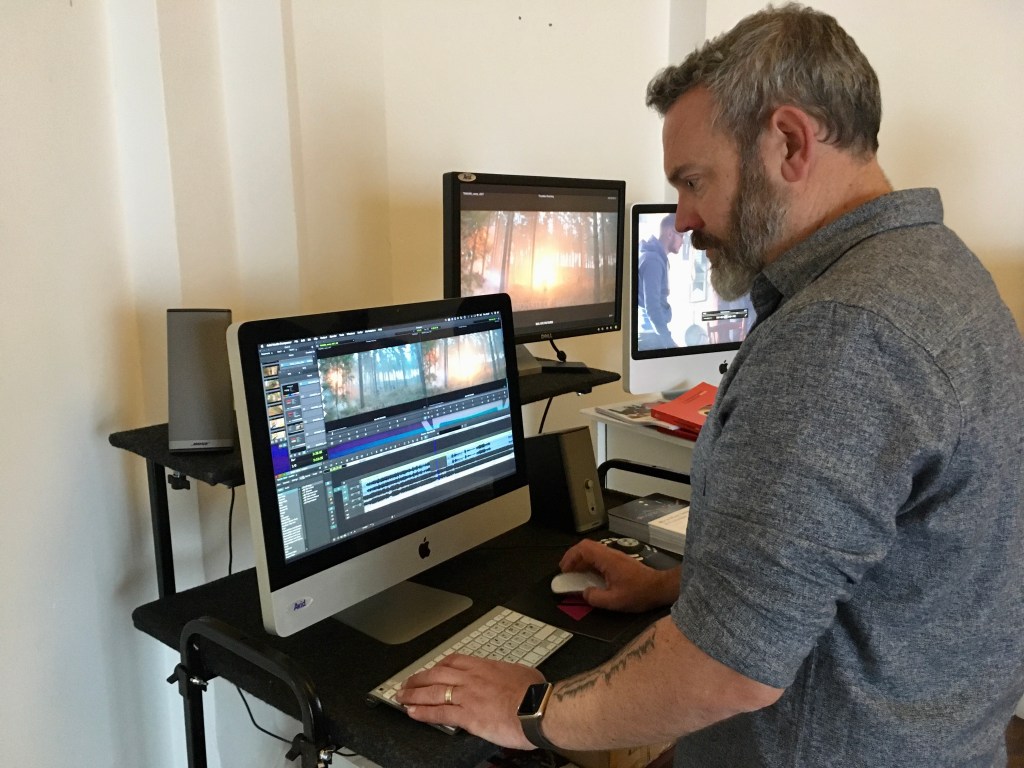
Film Post Production Editor / Lecturer Simon McGuire at the 2019 LSAD open day demonstrating trailer editing.
Our TUS campus open days are an ideal opportunity for you, your friends and family to join us on campus and find out first-hand what it is really like to be a student at TUS and if you are thinking about a career in the Film, Broadcast or Music Industries then why not check out the LSAD Open Day on November 27th from 10 – 2pm on the Moylish Campus.
There will be representatives from the academic staff as well as current students to chat to you about our programmes:
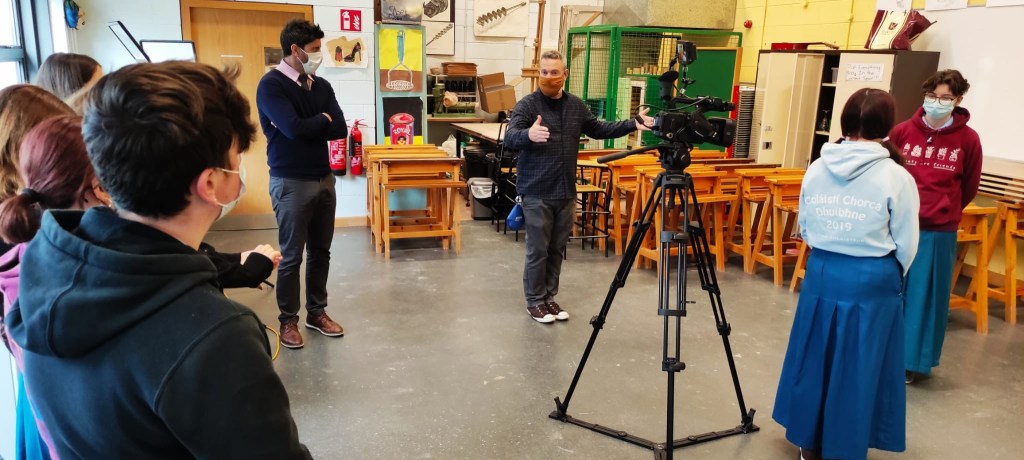
Simon giving a production planning workshop at Castletroy College, Limerick. Photo: Joe Shortt.
Taking play at Castletroy College on November 5 was the first of a series of workshops for Students wishing to study film making for transition year and beyond.
With an audience made up of TY and 5th year students, as well as some teaching staff, LSAD/ TUS lecturer, Simon McGuire spoke of his experience in taking a simple short film idea and realising through practical and theoretical planning to get it to screen.
Students began with a pitching session of their film ideas where they democratically choose their favourite script to make over the coming months. Their mission to enter the completed film to the Fresh Film Festival in 2022. Not an easy challenge for a student group who haven’t attempted this before, but their enthusiasm certainly showed throughout the workshop.
Simon’s goal was to take the chosen idea and brain storm with the students through practical demonstration and discussions, to help inspire them to realise the narrative and processes needed to bring the film to life.
Camera composition, as well as directing techniques were imparted to students as well as what to look out for when selecting locations and positioning actors in a scene.
The Castletroy Students will now move onto the scripting process as well as completing the preproduction planning before filming begins.
As production nears its end, Simon will return once again to give the students a workshop on post production for short film, where students will learn multiple editing processes for content and narrative creation.
With over 14,000 students on six campuses in Ireland’s Midwest and Midlands, TUS is Ireland’s newest and most unique Technological University. Through applied learning and fresh thinking, our focus is on meeting the evolving needs of society and industry, within our region and beyond.
The Creative Technologies Programmes, Creative Broadcast & Film Production, and Music Technology & Production, are looking forward to working with our new setup at the Moylish Campus. As part of the Department of Digital Arts & Media at Limerick School of Art & Design (LSAD) we offer creative opportunities to new students who are think of taking on the industries of Film, Television, Music and other creative areas.
For more information on the programmes at TUS check out the link below as well as the Open Days coming soon in Oct/Nov 2021:
Irish Screen Editors (ISE) will be hosting a webinar on the roles and responsibilities of assistant editors, particularly in the fields of high end TV drama and feature films. The webinar will consist of a panel of highly experienced assistant editors as well as an editor who made the transition from assistant editor in recent years and this panel will discuss the typical workflows for TV drama and film, the importance of the assistant editor in the post production pipeline and the skills and knowledge required for the job. Being an assistant editor is an extremely important, if somewhat undervalued, part of the post production process and ISE intends,through this webinar, to highlight the role and demonstrate its value.
This webinar will be ideal for students who are considering a career in post production. It will be held on Saturday the 11th of September at 15:00, The link to show your interest is on our Facebook Page HERE, and a link to sign up to the event below. We feel that this will be a very useful event for any students interested in pursuing editing as a career.
Basically it’s everything you ever wanted to know about assistant editing but were afraid to ask! Register for free HERE
It’s that time of the year again when CAO applicants have the change to amend their choices for college places. If you need to amend or add courses you can use the Change of Mind facility before the 1st July at 17:15.
Based in the Moylish Campus, in Limerick, the Creative Broadcast & Film Production and Music Technology & Production Programmes offer a blend of learning solutions for those thinking of a career in the creative industries. As part of the Department of Digital Arts & Media, Limerick School of Art and Design, students have availed of the practice based programmes and achieved multiple awards both locally and nationally.
For more information, check out the programmes and the CAO change of Mind page on the links below.
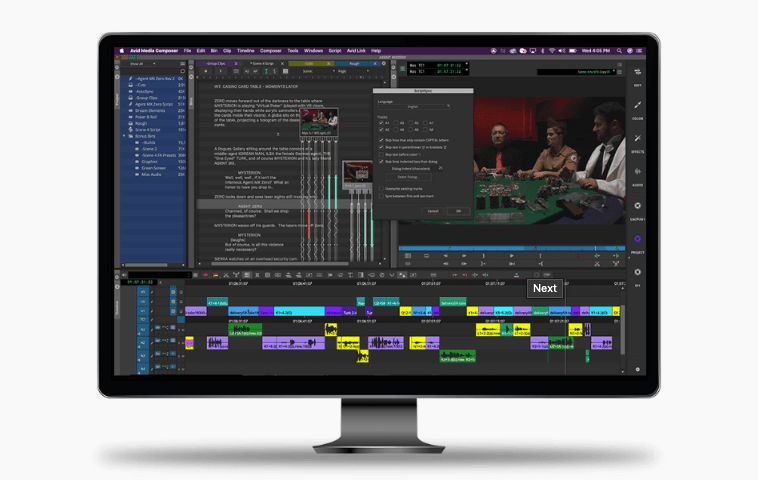
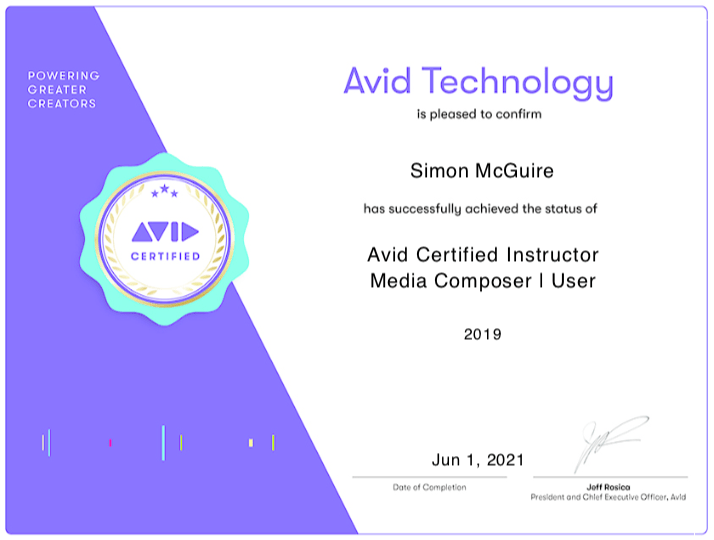
Delighted to have achieved the Avid Media Composer Instructor Certification for 2021 last week. As part of the Creative Technologies programmes at Limerick School of Art & Design, LIT, we hope to be offering students the opportunity to take the Avid User Certification 101 course in the coming 2021/2022 academic year.
Avid Media Composer is a film and video editing software application or non-linear editing system (NLE) developed by Avid Technology. Initially released in 1989 on Macintosh II as an offline editing system, the application has since evolved to allow for both offline and online editing, including uncompressed standard definition (SD), high definition (HD), 2K and 4K editing and finishing. Since the 1990s, Media Composer has been the dominant non-linear editing system in the film and television industry, first on Macintosh and later on Windows.
LSAD, LIT Graduate Showcase 2021 “RALLY” launches online for second year running
LIT’s Limerick School of Art & Design final year students launch their graduate showcase online for the second-year in a row.
RALLY the Limerick School of Art & Design Graduate Showcase of 2021 launches (Saturday May 29, 2020) at 3pm on https://www.facebook.com/LIT.LSAD with a series of documentaries depicting how this year’s graduates continued to create during the pandemic.
Creative Broadcast & Film Production and Music Technology & Production Graduates will feature from 3pm. Do check out the specially commissioned documentary by former Graduate Steve Hall (Hallway Media). See the promotional video below.
Well done to all the students on their work and achievements on what has been a very challenging year for all.
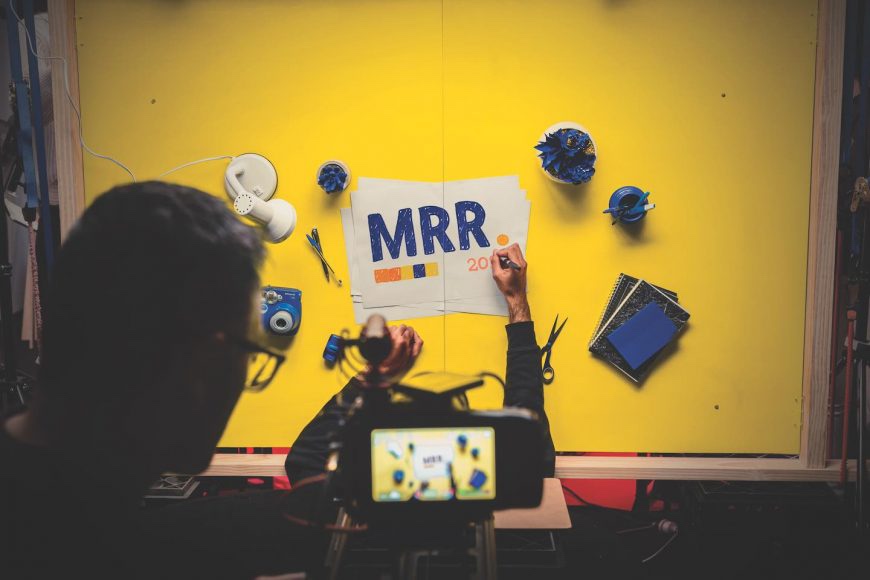
RØDE Microphones has announced the return of the World’s Largest Short Film Competition, My RØDE Reel. Now in its 7th year, RØDE has once again upped the ante with a monumental $1 million in cash to be won. This the biggest cash prize ever offered in a short film competition, affirming My RØDE Reel as the essential calendar event for filmmakers around the world. Entries are open now and close Wednesday, October 7.
What is My Røde Reel?
My RØDE Reel is the World’s Largest Short Film Competition. Over the last six years, more than 16,000 films have been submitted to the competition from 94 different countries, with RØDE awarding over $3.5 million in prizes to both emerging and established filmmakers. My RØDE Reel has launched hundreds of careers through providing a global platform for filmmakers to gain exposure, offering grants and scholarships, and giving away tonnes of RØDE microphones and filmmaking gear. In 2020, My RØDE Reel is bigger and better than ever.
The Prizes & Categories
The winners of My RØDE Reel 2020 will receive a share of US $1 million, the biggest cash prize ever offered in a short film competition.
This announcement comes off the back of RØDE Founder and Chairman Peter Freedman’s purchase of Kurt Cobain’s iconic ‘MTV Unplugged’ guitar for a world record-breaking US $6.01 million at auction. The guitar was bought to spotlight the struggles of the global arts industry; Mr. Freedman plans to take it on a worldwide tour of exhibitions, with all proceeds (including the guitar) going to the performing arts.
“Giving creatives a leg up has always been fundamental to what we do as a company,” says RØDE CEO Damien Wilson. “Whether it’s been through giving away gear, awarding scholarships or providing a platform to get their work in front of a huge audience, the objective of My RØDE Reel has always been to help filmmakers take the next step in their career.”
“We are incredibly excited to be giving away this massive cash prize,” he continues. “People in the film industry are doing it tough right now. This year, we wanted to not only give entrants the chance to win RØDE mics and awesome gear, but also offer a substantial amount of money to help kickstart the career of the next big thing, fund new projects, or cover living expenses so filmmakers can continue to work through these trying times. This money will make a big difference for a lot of people.”
The top three films for each of the competition categories will win a share in the $1 million cash prize pool, except for the major prize, the Judges’ Choice, which has just one life-changing prize of $200,000.
There are 10 categories in total: five genre categories – Drama, Comedy, Action, Documentary, Animation and Behind-The-Scenes – and five special categories – Judges’ Choice, People’s Choice, Sound Design, Young Filmmaker, and Best Chinese Film. All-in-all, 28 filmmakers will win a share in the prize money.
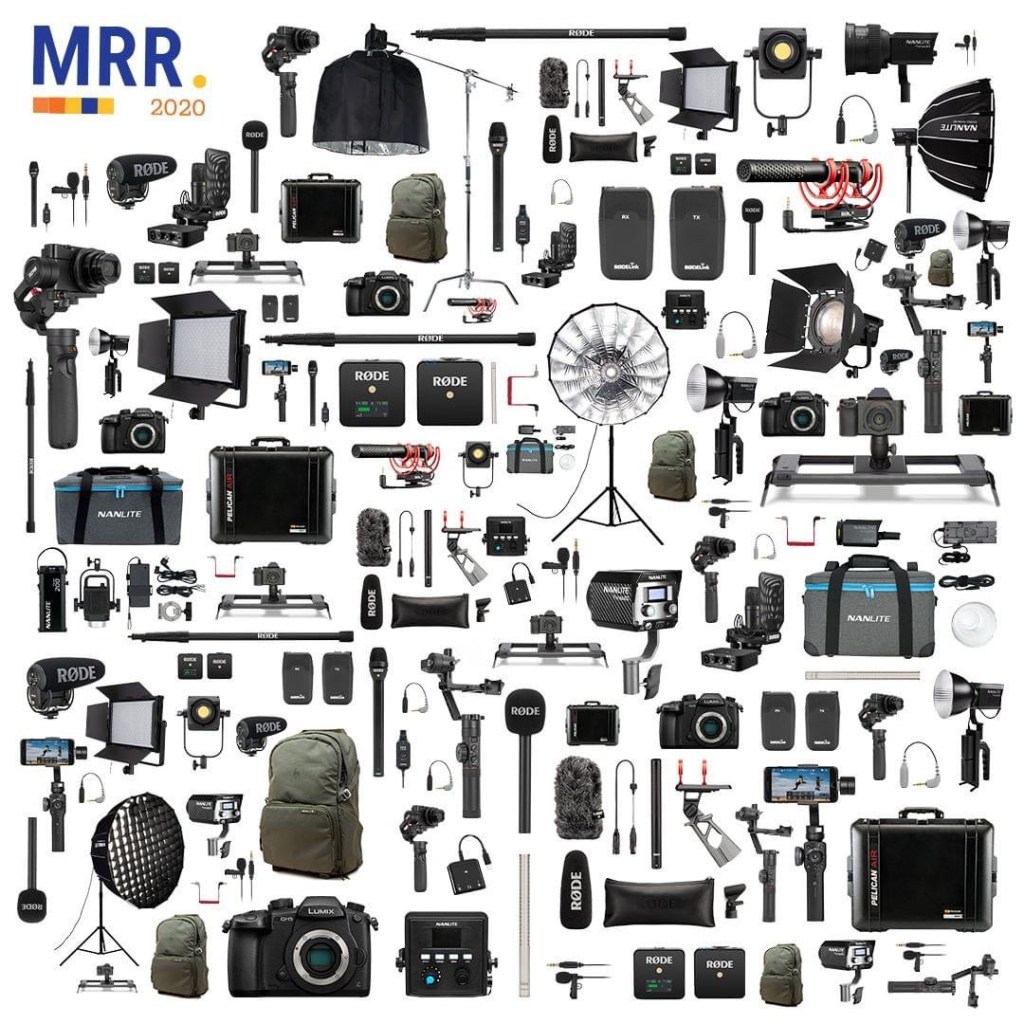
As well as this incredible cash prize pool, RØDE is giving away a prize pack to the winners of the 10 categories. These are loaded with gear from the world’s leading filmmaking brands, including LUMIX, Nanlite, Zhiyun, Mzed, Musicbed, Rhino, Adobe, Brevite, Pelican, ARRI and, of course, RØDE microphones and accessories. Combined with the cash, this brings the total prize pool to over $1.5 million, by far the biggest offering for any short film competition.
Visit the My RØDE Reel website for more information on the prizes and categories.
How To Enter
Head to myrodereel.com and log in or sign up for an account to access the starter pack. This contains the My RØDE Reel title card, which must feature at the start of your film.
Make a 3-minute short film. The brief is completely open – use the different categories to inspire the direction of your film.
Make a 3-minute behind-the-scenes (BTS) film, which must feature a RØDE product.
Upload your short film and BTS film to YouTube, then submit this link to myrodereel.com.
Share your film for a chance to win a People’s Choice Prize.
For the full details on how to enter, head to myrodereel.com and log in or sign up for an account. This contains the starter pack, information on the competition, freebies, tips, inspiration and more.
Entries are open now and close at 12PM (AEDT/GMT+10) Wednesday, October 7, 2020. Head to myrodereel.com for more info
The first semester of having to teach online is over. It was a unique experience both for faculty as well as students. Some were able to handle it fairly well; we are a profession of technically adept filmmakers, after all.
But with the high probability of the Fall 2020 semester also being primarily online, and maybe even the following Spring 2021 (depends on when we see pharmacologic solutions), many students are having second thoughts about continuing their education. They are thinking, “Is it worth it? Maybe this is the time to take a semester or two off?”
Initially, the thought of taking a long sabbatical makes sense. Learning online is not the most effective means to learn filmmaking. After all, the production of films involves a lot of hands-on and close social activity. Only the act of scriptwriting is a solitary vocation.
However, as much as most of us Production Faculty want to reassure ourselves that the hands-on components of what we teach is state-of-the-art and irreplaceable – the realistic fact is that we only cover the tip of the iceberg.
Most of what we teach involves mindset and understanding the basic principles of our technical crafts (cinematography, editing, audio, etc.). It is not so much about the specific equipment, but what to do with said equipment in order to communicate.
This semester made me realize that most of what I had to share with my students was an understanding of how and why we do what we do on the set. I recalled the first thing that I concluded after leaving college with a freshly printed diploma and transcript. Working with seasoned professionals in Hollywood taught me more (technically) in several weeks than I had learned over four years on campus! The equipment and technology were way beyond the amateur levels provided by our film department.
However, my overall understanding of aesthetics and production flow was equal, if not sometimes superior to that of the veteran crew around me. So, my education was successful in terms of teaching me the big picture. I knew the principles of lighting, just not the nicknames of all the Mole-Richardson lights nor how to thread up a 35mm ARRI. I understood what was necessary to record on set, just not how to operate the fancy mixing panels and other gear.
The point that I am making is that most of what you will ultimately derive from a college degree in film/video/media does not rely solely on hands-on experience. It comes from learning the underlying thought processes, goals, and mindset of a professional. It goes hand in hand with learning the fundamental concepts of filmmaking, including the aesthetics, art, and business aspects.
It is about being pointed in the right direction, so that you know what you need to continue mastering on your own. What instructional videos to watch on the internet, what software is essential, and the industry standards. Seminars and workshops sponsored by guilds and manufacturers. User groups.
Practical Considerations Against Postponing College
By continuing to attend online, you keep your mind sharp and progress through your degree program. Sure, you will miss out a lot of the hands-on experience, but as I have learned in my many years of life on this planet: most of the hands-on training that you get at the majority of even the elite film programs does not equate to the levels that we operate at in the industry.
Your degree in film is not respected for what a college may or may not prepare you for in terms of hardware proficiency. That is a skillset that you can rapidly acquire with but a few weeks of workshops and seminars. On your own, or through post-curricular events sponsored by your college department.
For example, the department in which I teach has had numerous discussions regarding conducting special sessions as soon as it is deemed safe to do so, with many instructors even volunteering their own time and resources to make these happen. (When you leave Hollywood in order to teach, it certainly is not for the money!)
As a student, keep in mind that many of your classes are outside of the production realm. Writers learn much from understanding psychology, sociology, and history. Producers and freelancers should master accounting, contract law, and other business-related subjects.
If you do decide to take time off, what do you plan on doing with it?
Internships, during a pandemic, are scarce – and rarely involve any hands-on due to social distancing.
Earn money while you are no longer in college? Doing what? The economy is barely hiring right now, unless you want to be a delivery driver. Retail establishments are more concerned about hiring back some of the people that they had to lay off. There is no great rush to bring in a bunch of high school grads (who did not complete college yet) and offer them enticing positions.
But let’s pretend that money is not the issue. You could travel the world and experience a diversity of cultures. Or maybe not, on account of this virus thing.
Having spent six months or a year sitting around in a mask and bored like hell – you decide that you are ready to return to campus…
Although the colleges may be eager for you to re-enroll, they cannot guarantee your spot in the film program. Your original “class” of film students has progressed in their academic hierarchy and are now in the more advanced courses of the curriculum. You can no longer team up with your old friends on projects.
You now have to compete, not only with all of the new students entering (or progressing) in your program, but also with all of the returning “time off-ers”.
COVID-19 has forced budget cuts at all of the colleges. Courses may not have been cut, but it is unlikely that the number of courses/sections will be increased. Departments have limited production equipment, edit bays, computer labs, screening rooms, soundstages, control rooms, large classrooms, and other physical facilities.
So even if the academic administrators approved opening up additional sections of some courses and were willing to pay the instructors, there still may not be enough resources to support that many new students in the program.
Learn what you can, while you can
Going back to college after months away can be particularly challenging from a mental standpoint. Think about how hard it is to get back into an academic routine after just a summer break!
It will be even harder after a semester or two away!
And the film industry will not welcome you without a college degree. But they will not be as concerned about your lack of hands-on set experience compared to what they may think of your lack of a focused college degree in the field.
Trust me. Once things settle down in terms of the virus, there will be lots of opportunities to get up to speed with the latest gadgets. Even with 40 years professional experience and a holder of three degrees in filmmaking (B.A., M.A., Ph.D. ), I still have to strive to keep up with all of the technological advancements raining down on our industry every year. Workshops and seminars abound.
But that decision to postpone the completion of your college degree could cost you dearly. A year of “life experience” will not equate too much in the way of practical experience. But it could easily cost you your spot in an elite film program.
Is it really worth losing a year, just because you may not get as much hands-on production experience as you will in the first few weeks after you graduate?
Fred Ginsburg, CAS, Ph.D., is a highly experienced and award winning professional sound mixer whose decades of work includes features, episodic TV series, national TV commercials, corporate, and government. He is a member of the Cinema Audio Society and the University Film & Video Association. Fred holds doctorate, graduate, and undergraduate degrees in filmmaking; has published more than 200 technical articles along with a textbook, instruction manuals, and hosts an educational website. Fred instructs location recording and post-production sound at Calif State University Northridge
On the back of this very well composed article and if you are trying to decide on the Change of Mind CAO option, then please check out the Creative Technologies Programmes at LSAD.









 Simon McGuire