
Archive for the ‘Technology’ Category

Dr Simon McGuire

The landscape of higher education in Ireland, and particularly within the creative sectors of film and television, is undergoing a profound recalibration. As educators, we find ourselves navigating a convergence of technological acceleration, infrastructural constraint, and shifting economic and cultural realities. Yet within this turbulence lies an opportunity: to rethink not just how we teach, but what it means to prepare students for a screen industry that is itself in a constant state of flux.

With a sector that is expanding faster than its classrooms, Ireland’s audiovisual industries are thriving. Recent data highlights employment of nearly 16,000 people and significant economic contribution, underlining the industry’s vitality and global relevance (Screen Ireland Link). Alongside this, reports on immersive technologies and virtual production point toward a future defined by real-time rendering, AI-assisted workflows, and cross-platform storytelling (Skillnet Ireland Link). However, Higher Education has not expanded at the same pace. Institutions are expected to deliver industry-ready graduates while contending with ageing facilities, limited access to high-end equipment, and increasing student numbers. This mismatch between industry expectation and educational capacity is becoming one of the defining tensions in Irish creative education and I am sure is a talking point in this week’s teaching union meetings across the country.

There is a material reality also with the financial constraints being well documented. A widely cited government report showed a funding gap of over €300 million annually in Irish higher education, a deficit that continues to shape institutional decision-making (The Irish Times Link). While the report is three years old now, this underfunding still exists and I would argue that the figure is far greater and manifests itself in tangible ways such as: insufficient studio space, outdated post-production labs, and limited access to industry-standard tools such as camera, lighting and sound equipment. At the same time, the cost of keeping competitive film and television programmes is rising. Cameras, lighting rigs, editing suites, and now virtual production environments require continuous and not just the initial capital investment. Yet universities increasingly rely on hybrid funding models, including in some cases industry partnerships, which can risk narrowing the scope of academic inquiry toward commercially workable outputs (Public Policy Link).

Space is another critical pressure point. Reports on Higher Education infrastructure note that institutions are being forced to rethink how physical environments are used, with flexible and multi-purpose spaces becoming essential (Savills Link) For film and television education, traditionally reliant on dedicated studios, this presents both a challenge and a creative constraint. The most significant shift is technological. The integration of AI into editing workflows, the rise of cloud-based collaboration, and the emergence of virtual production are fundamentally altering the grammar of screen production. These are not incremental changes; they redefine authorship, labour, and craft.

Irish higher education has already begun adapting. Quality reports highlight increased digitalisation of teaching, learning, and assessment, alongside hybrid and remote workflows (Quality and Qualifications Ireland Link). However, there is still a gap between adopting digital tools and embedding them meaningfully into pedagogical or andragogical practice. The challenge is not simply access to technology, but developing critical, reflective practitioners who can navigate and question these tools. Considering these pressures, I propose three practical, scalable responses that can be implemented across Irish Higher Education.

Firstly, a distributed studio model.

Rather than centralising production within a single campus facility, institutions should adopt a distributed model of practice. This would involve:

  • Leveraging community media hubs and regional partnerships
  • Embedding production activity in real-world contexts
  • And if possible, sharing resources across institutions and sectors

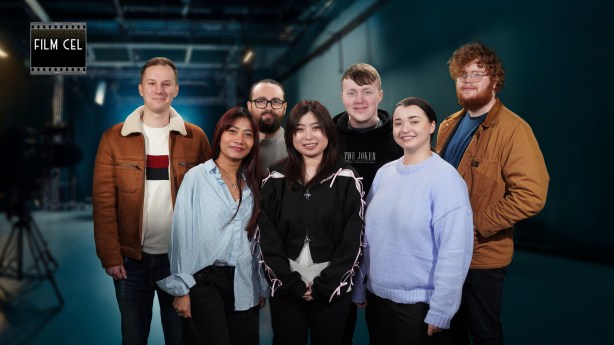
In my doctoral research, I suggested an in-house production (IPU) unit to bring teaching and learning of craftsmanship together with industry engagent. I create one such IPU at my institution in the form of Film Cel (Film Craftsmanship, Excellence and Learning) (Link) at my institution, LSAD, TUS, and I believe that an IPU like this could bring together the the three elements above together for the distributed model of practice. National policy already points in this direction. The Future of Media Commission recommends the development of shared media hubs and collaborative training infrastructures to support talent pipelines (RTE Link). For educators, this model would not only alleviate space constraints but situate learning within authentic production ecosystems.

A second approach would be to look at curriculum as a workflow and not a module.

Traditional module-based teaching structures are increasingly misaligned with industry practice. Instead, curricula could be restructured around workflows such as:

  • Development → production → post-production → distribution
  • Cross-disciplinary collaboration (editing, sound, VFX, producing)
  • Integration of AI and virtual tools as part of process, not add-ons

This approach would reflect the realities of contemporary screen industries, where roles are fluid and pipelines are interconnected. It also aligns with broader Higher Education trends toward flexible or hybrid learning environments (Royal Irish Academy Link).

Finally, there is an opportunity for industry embedded learning, but with safeguards for the institution, staff, and students. Partnerships with industry are essential but must be carefully structured. Institutions should:

  • Co-design projects with industry partners
  • Embed internships, mentorships, and live briefs into programmes
  • Maintain academic independence and critical inquiry

While private sector funding can provide vital resources, it also raises concerns about the commercialisation of education (Public Policy Link). The goal, therefore, is balance: enabling access to industry without compromising the broader educational mission.

So, with these three suggestions we could take the future of teaching film and television in Ireland from constraint to creative. The teaching and learning would not be defined by the resources we lack, but by how we respond to those limitations. Financial pressures, spatial constraints, and technological disruption are not temporary obstacles, they are the conditions within which contemporary education must operate. As educators, our role is to transform these constraints into pedagogical or even andragogical innovation. To move from the idea of the university as a site of instruction to a site of production, collaboration, and experimentation.

If we can achieve this, we will not simply keep pace with the industry, we will help shape its future.
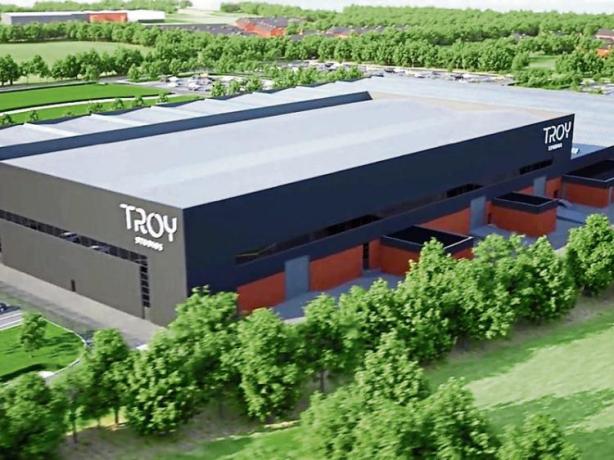
Troy Studios, Limerick City.

Story via Limerick’s Live 95fm

Thursday, 29 January 2026 11:00

By Live95 News Team

The news was announced this morning.  

BiggerStage has announced a multimillion-euro agreement with Hackman Capital Partners’ Troy Studios and The MBS Group to create a global unscripted production hub at its world-class production facility in Limerick.

Troy Studios, Ireland’s largest and most modern studio facility, spans 26 acres, including four sound stages totalling 100,000 sq. ft (9,290 sq m) with an overall footprint of 350,000 sq. ft (32,516 sq m).

Under the multi-year deal, both parties will invest to attract major international television formats to Limerick, with BiggerStage producing projects on the ground while supporting extensive training and skills development.

In addition, Troy Studios will be a home for original IP development – a destination where the next wave of global hit programmes can be piloted at scale with unrivalled efficiency. The facility will host a number of pilot projects for major international partners in 2026, alongside BiggerStage’s expanding original slate.

Ireland has seen substantial growth in international TV production over the past three years, supporting dozens of SMEs and creating hundreds of skilled jobs. Since its 2021 inception, BiggerStage has produced over 250 hours of primetime programming in Ireland, including The Floor, Next Level Chef, Beat Shazam, Name That Tune, and Don’t Forget The Lyrics. Central to BiggerStage’s success is a cost-effective EU-based production model with a common travel area with the UK.

Speaking from the Prime Time production conference in Canada Pat Kiely, CEO & Founder of BiggerStage, said: “We are truly entering a golden age for the television industry in Ireland. Europe’s first unscripted tax credit will help Ireland compete more effectively on the world stage to become the home of global formats, the fastest-growing area of  television production. This investment in Troy Studio will allow us offer a world class base for international production. Irish crews are renowned as the best in the business and we look forward to creating a sustainable centre of excellence in Limerick, surrounded by great infrastructure, expanding centres of learning and a brilliant hospitality industry. Ireland’s creative industry is on a real high; never has there been a better time to expand our global offering and drive more investment in jobs, training, development and infrastructure.

Also speaking from the Prime Time production conference in Canada, Patrick O’Donovan, Minister for Culture, Communications and Sport said “This announcement is yet another strong signal that Ireland is open, competitive and ambitious when it comes to investment in the creative services sector. The creation of a global hub for unscripted production at Troy Studios will not only attract major international players to Limerick, it illustrates how Ireland has the infrastructure, talent, creativity and production expertise to lead in this space.”

Jason Hariton, Chief Studio and Real Estate Officer at MBS Group added: “We look forward to continuing our work with the BiggerStage team to ensure they have the technical equipment and resources required to continue their leading role in the growth and success of Ireland’s vibrant screen industry.”

Elaine Geraghty, Managing Director Troy Studios, said, “The new deal firmly positions Limerick and Ireland at the forefront of global television production, supported by the unique advantages presented by Ireland’s unscripted tax credit. Together, we are dedicated to building a global production hub that will benefit the creative sector, generate employment, and deliver outstanding original content for audiences worldwide.”

Alastair Boucaut, EVP Global Studio Platform, Hackman Capital Partners, said, “We are thrilled and delighted that BiggerStage has made a long-term commitment to Troy Studios. Our facility was built to welcome bold and innovative companies like BiggerStage that have proven international production success. This collaboration will bring exciting projects to Ireland and strengthen the country’s creative industry.” 

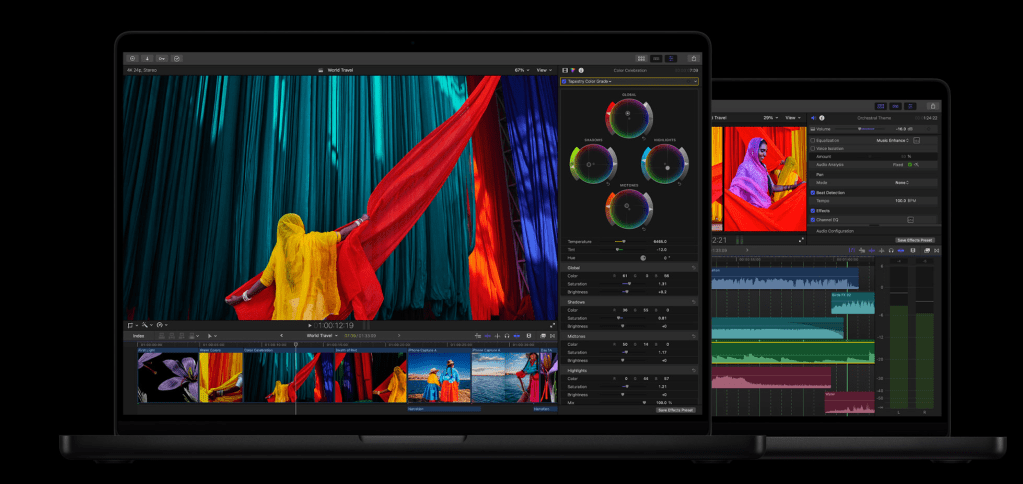
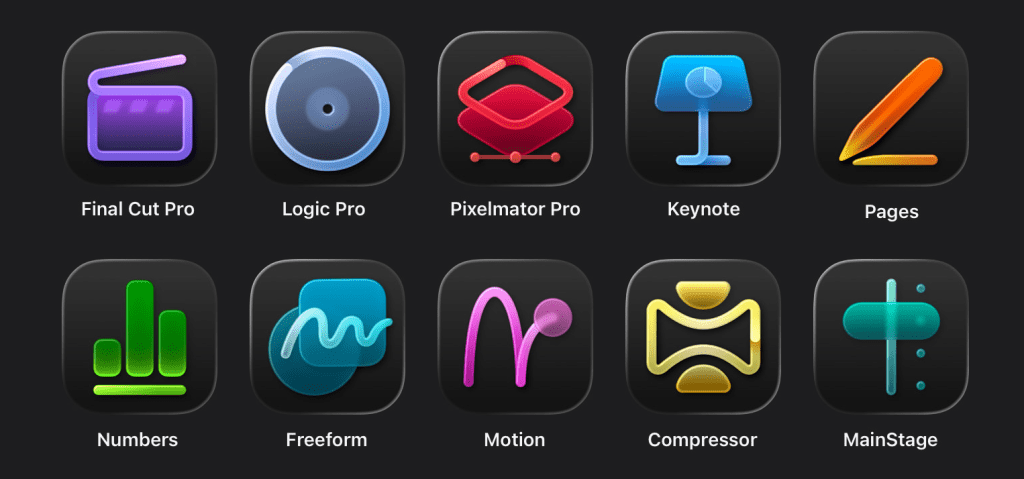
Apple have finally released their much anticipated ‘Apple Creator Studio’ which has raised a few eyebrows.

The apps you need for everything you want to create. Craft your stories with video in Final Cut Pro. Reimagine images in Pixelmator Pro. Produce your best music in Logic Pro. Supercharge productivity with premium content in Keynote, Pages, Numbers, and Freeform. Boost workflows with AI features that build on Apple Intelligence. And with Family Sharing, up to five other people can enjoy your subscription too.

With a price tag for a new subscriber at $12.99 per month or $129 per year after your free trial, it is yet another entry to the area of the market that Adobe Creative Suite has dominated for some time. With the DaVinci Resolve Studio package still retailing at the €313.65 (inc: VAT) for a licence (however Black Magic have also hinted recently at a subscription based option for their software package) this is a competaive option from Apple.

It remains to be seen if Apple and its Final Cut Pro NLE can regain some editing fans, but in the meantime it might be worth checking out the new suite of software apps on a new M4 chip Mac mini or studio.

Check out the details HERE

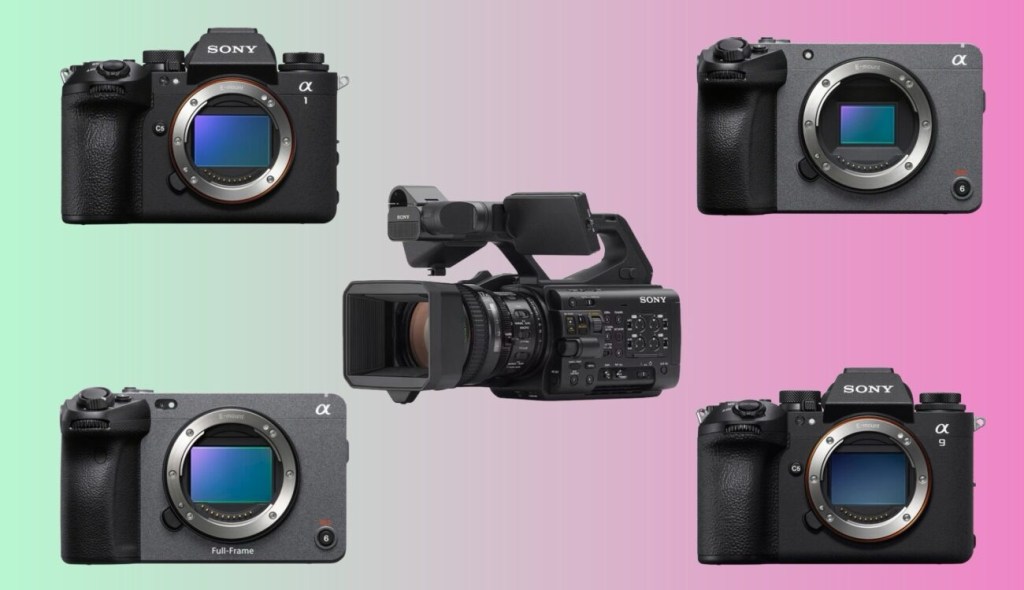
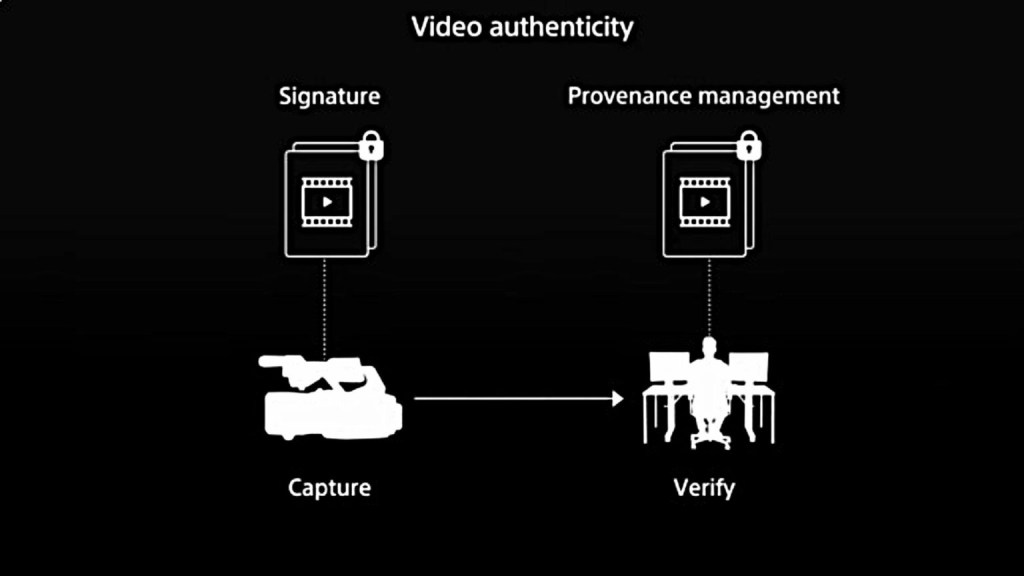
Sony Electronics has expanded its camera authenticity technology to support video content verification, marking a significant industry first in the fight against AI-generated fake content. The C2PA-compliant solution is now available for five Sony cameras, with four additional models scheduled for support by 2026.

Read the full article HERE

We can bet that other industry equipment suppliers as well as NLE providers will also follow suit, however with the likes of Adobe embracing A.I. this may prove difficult.

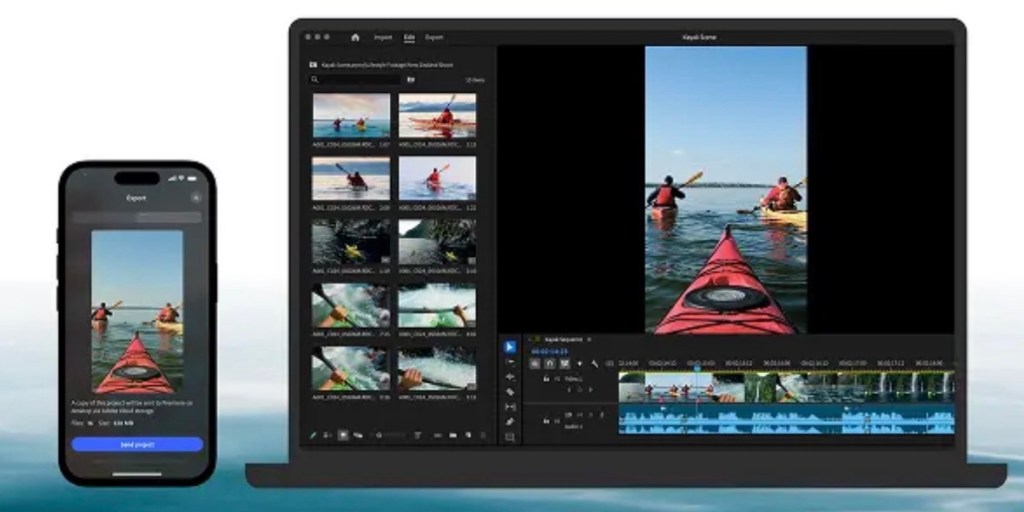
Adobe have released their new mobile version of their flagship NLE, Adobe Premiere for iOS devices. This new iteration replaces the basic Adobe Rush app which didn’t take off as well as Adobe had anticipated all those years ago.

See the download info HERE

According to Wired:

ADOBE HAS HAD a busy year designing and redesigning a number of its most popular apps for mobile, and Premiere for iPhone is the latest—a mobile-first video editing workflow that adapts most of the tools from the desktop version of Premiere to a mobile user interface. You can trim, layer, edit, and even auto-generate captions, alongside all the basic editing features you’d expect, like color and exposure adjustments.

The automatic resizing feature is particularly nice, adapting videos to both horizontal and landscape platforms, making sure your subject is centered for both cuts. As with anything Adobe releases these days, there are plenty of AI-powered features, including the ability to generate backgrounds from a prompt and create sound effects from your voice.

Premiere for iPhone is free, though if you want to use the AI features, you’ll have to buy credits within the app. According to Adobe, the Android version is still under development. —Scott Gilbertson

Colin Michael has released a tutorial for iOS users on the app which can be viewed below:

It remains to be seen if this software will be adopted by mobile editors, as it has some stiff competition with Blackmagic’s Da Vinci Resolve for iOS.

Time will tell whether it fills a gap in the market or become another “Rush” ed project.

New DaVinci Resolve 20 training books now available! HERE

These step by step training guides are for both new and existing users. Using a project based approach, you will discover how to edit a sophisticated trailer for a documentary feature, grade your film using DaVinci Resolve’s legendary color correction tools, enhance your soundtracks with Fairlight and build custom visual effects using Fusion.

With The Beginner’s Guide to DaVinci Resolve 20, you’ll learn how to:

  • Edit your own projects using industry standard editing tools.
  • Normalize audio levels and automatically mix music using the new Ducker track effect.
  • Read video scopes to adjust contrast, color balance and saturation.
  • Create secondary corrections using Color Warper and Color Slice.
  • How to set up projects, sync and manage audio files.

In The Editor’s Guide to DaVinci Resolve 20, you’ll discover how to:

  • Use advanced editing and trimming techniques for different genres.
  • Set up and manage complex projects using smart bins and metadata.
  • Automatically generate transcriptions to jump-start your editing.
  • Use trimming tricks and real time dynamic trimming.
  • Apply multi camera syncing and editing techniques.

The Fairlight Audio Guide to DaVinci Resolve 20 will show you how to:

  • Navigate and customize the Fairlight interface.
  • Work with the Fairlight Sound Library.
  • Create and edit dialogue, music and sound effects tracks.
  • Record voiceover, ADR and Foley tracks.
  • Work with audio track layers to stack, split and build a composite.

In The Colorist Guide to DaVinci Resolve 20, you’ll learn how to:

  • Balance and match footage using primary grading tools.
  • Analyze and color correct images with the help of scopes.
  • Track people and objects with windows and magic masks.
  • Migrate XML timelines and roundtrip workflows.
  • Work with nodes to create sophisticated grades.

The Visual Effects Guide to DaVinci Resolve 20 includes information on how to:

  • Composite using nodes.
  • Combine optimal takes with the split screen technique.
  • Track objects using the point tracker and planar tracker.
  • Compose with multi layer PSD files.
  • Create green screen compositing with the delta keyer and clean plate.

In Advanced Visual Effects Guide to DaVinci Resolve 20, you learn how to:

  • Enhance live action environments with 3D particles.
  • Use multiple keyers for advanced green screen keying.
  • Use Magic Mask to save time rotoscoping.
  • Work seamlessly with 3D assets.
  • Set up 3D scenes with cameras, lights and depth of field.

These books are designed for both beginners and professionals. Beginners will find clear and concise lessons to get you up and running quickly. If you’re a professional switching to DaVinci Resolve, you’ll find lessons that cover everything from the basics to working with audio, adding text, effects, and more. You’ll also find dozens of pro tips and tricks that will help you make the switch to DaVinci Resolve!

Here is the direct link: http://bmd.link/7tipKM

DaVinci Resolve 20 is officially here.
Blackmagic has finalized its latest post-production suite, introducing over 100 new features—many of them AI-powered.

🧠 From AI IntelliScript to Multicam SmartSwitch and major upgrades to Fusion and Fairlight, here’s everything you need to know about the final release of DaVinci Resolve 20:
👉 https://ymcinema.com/2025/05/28/blackmagic-announces-the-final-release-of-davinci-resolve-20/

Download from here: https://www.blackmagicdesign.com/products/davinciresolve

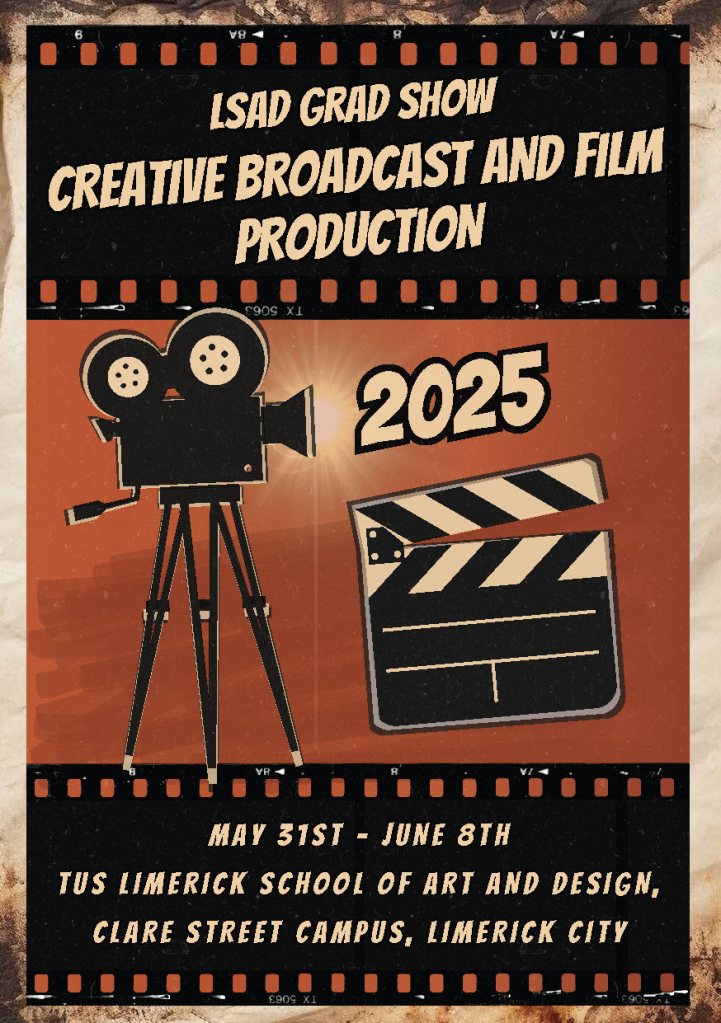
Taking place at the annual LSAD Graduation show at the Clare Street Campus, Limerick, will be the screening of end of year capstone projects from the 4th year Creative Broadcast & Film Production students.

There will be a series of short films, documentaries, portfolios and dissertations available to the public in a selected location in the campus, where the students themselves will also be in attendance to chat about their work and hopefully network too with visitors and even interested industry parties.

Why not come along to this event which is open from May 31st to June 8th 2025.

This highlights reel features a selection of content and programmes that were created by the 2025 crew of Film CEL. This years crew excelled themselves on all productions and projects, gaining experience on planning, camera operation, grip and rigging, lighting and sound and post production using Avid Media Composer.

This crew will continue as students in the year 4 of the Creative Broadcast and Film Production programme at LSAD, TUS where they will take these skills and develop new content and creative works for their final year.

Music track: Tell Me by Burgundy Source: https://freetouse.com/music Copyright Free Music for Video

Film CEL is an in-house production unit for the Creative Broadcast & Film Production Programme at LSAD, TUS.

As a long time user of DaVinci Resolve Studio, I value this NLE highly in both my professional work as well as an academic when instructing my students.

Recently with the release of the new public beta version of DaVinci Resolve 20, and its huge amount of new features, their announcement video claimed about a possible upgrade fee in the future. Resolve is loved by users for both its intuitive use as well as its non-subscription, and thus this announcement created a worry that this non-subscription platform was coming to an end. However Darren Mostyn, who i highly recommend editors and colourists follow his YouTube account (click his name to go to that account), managed to speak to a representative from BMD Europe and get a full definition of what this upgrade fee will actually be. Check out the video below: