Dr. Simon McGuire

Over the past decade, something quietly transformative has been happening in the Mid-West of Ireland. Once considered peripheral to the Irish screen industry, Limerick is increasingly finding itself at the centre of major international film and television production. At the heart of this change is Troy Studios, Ireland’s largest purpose-built film and television production facility. Since opening in 2017, the studio has attracted large-scale international productions and helped establish the Mid-West as a serious player in global screen production, (limerick.ie) Recent developments signal that this growth is far from slowing down. A new multi-million euro partnership aims to transform Troy Studios into a global hub for unscripted television formats, with international productions expected to begin pilot projects from 2026 onwards. (limerick.ie)

These developments raise an important question for the region: If production is growing rapidly in Limerick, why is so much post-production still happening elsewhere?

Historically, Ireland’s post-production infrastructure has been concentrated in and around Dublin. Editing suites, sound mixing facilities, colour grading houses, and VFX studios have developed around the capital due to the clustering effect typical of creative industries. Examples of these would include; ScreenScene, Pirana Bar and Element Post to name but a few… not forgetting the recently closed Windmill Lane Post facility.

However, Limerick’s screen ecosystem is beginning to look different. Large productions have already demonstrated the region’s capability. Apple TV+’s Foundation, and Angel TV’s The Wayfinders for example, generated hundreds of jobs during their time at Troy Studios and signalled to international producers that the Mid-West could host high-end television drama. The production of series two of The Wayfinders is also returning this April for its second series. Alongside these productions, a skilled workforce is emerging. More than 350 locally-based crew now operate in the region, many with experience on international features and television series. Yet while cameras, sets, props, and production offices are increasingly located in Limerick, the editorial pipeline often moves elsewhere once filming wraps. The common feedback I receive about this is that ‘editors can be remote’, ‘media drives travel‘, ‘post workflows can travel‘… and with them, the economic and creative opportunities.

There is a case to be made for a Mid-West Post-Production House. Imagine a dedicated post-production facility located in Limerick city. Not simply a collection of editing rooms, but a full post-production ecosystem designed to support regional productions from offline edit through to delivery.

Such a facility could include:

  • Offline editing suites (Avid / Premiere / Resolve)
  • Shared storage and media management infrastructure
  • Colour grading theatre
  • Audio post-production and ADR facilities
  • VFX and motion graphics workspaces
  • Remote collaboration capabilities for international productions

This could fundamentally change the regional production pipeline. Instead of productions filming in Limerick and finishing in Dublin or London or further afield, projects could remain in the Mid-West for the entire creative lifecycle. This would in affect also benefit a talent pipeline that already exists in the region and strenghtening the argument of targeted education and training. Across Ireland, and particularly in the Mid-West, increasing numbers of students are studying film, television production, and post-production at third-level institutions such as LSAD, TUS, Mary Immaculate College UL and the Educational Training Board FETs. A number of these students specialising in editing, sound, and digital storytelling. Yet a recurring challenge emerges after graduation of gaining a foot in the door for crafts such as editing and post-production. There are very little opportunities for graduates outside of Dublin to build their careers and with the ever increasing cost of living in the capital city, where most jobs exist in this sector, the pressure to relocate to the capital or leave the industry is a real problem before these graduates even begin. A post-production house in Limerick could help retain this talent locally while strengthening the regional creative economy.

There are some economic ripple effects in this concept. Film production has already demonstrated its economic impact on the Mid-West. A single feature production can involve more than 90 local businesses, from hotels to construction suppliers. (Limerick’s Live 95) And a new Post-production eco-system could extend this economic footprint. Unlike location shooting, post-production can last months rather than weeks, bringing sustained employment to editors, assistant editors, sound designers, colourists, and technical operators. It also attracts a different type of creative professional, one who may settle in a city long-term rather than arriving temporarily for a shoot. This could contribute to the emergence of a permanent screen industry cluster in the Mid-West.

Ireland’s screen industry has long benefited from regional diversity of locations. But the next phase of growth may depend on regional diversity of infrastructure. Dublin will remain a critical centre for the industry, but if the Mid-West is to fully realise the potential created by Troy Studios and the growing local crew base, the region must also invest in the stages after the cameras stop rolling. Editing is where stories truly take shape. And perhaps the next chapter of Ireland’s post-production story could be written in Limerick.

There are some questions that may be worth asking if a post-production house in the Mid-West is possible:

  • Could a regional post-production facility operate sustainably outside Dublin?
  • What scale of investment would be required to establish a viable editing and finishing house?
  • Could partnerships between industry, local authorities, and third-level institutions make such a project feasible?
  • How might a facility integrate with the production activity at Troy Studios?
  • Could this create a regional training pathway from student to assistant editor to editor?
  • Might international productions be encouraged to complete post in Limerick if the infrastructure existed?
  • Could shared facilities reduce barriers for independent filmmakers in the region?
  • And most importantly: who might take the first step in making it happen?

The growth of screen production in the Mid-West suggests that the opportunity is real. The question now is whether the region is ready to edit its own future.

Troy Studios, Limerick City.

Story via Limerick’s Live 95fm

Thursday, 29 January 2026 11:00

By Live95 News Team

The news was announced this morning.  

BiggerStage has announced a multimillion-euro agreement with Hackman Capital Partners’ Troy Studios and The MBS Group to create a global unscripted production hub at its world-class production facility in Limerick.

Troy Studios, Ireland’s largest and most modern studio facility, spans 26 acres, including four sound stages totalling 100,000 sq. ft (9,290 sq m) with an overall footprint of 350,000 sq. ft (32,516 sq m).

Under the multi-year deal, both parties will invest to attract major international television formats to Limerick, with BiggerStage producing projects on the ground while supporting extensive training and skills development.

In addition, Troy Studios will be a home for original IP development – a destination where the next wave of global hit programmes can be piloted at scale with unrivalled efficiency. The facility will host a number of pilot projects for major international partners in 2026, alongside BiggerStage’s expanding original slate.

Ireland has seen substantial growth in international TV production over the past three years, supporting dozens of SMEs and creating hundreds of skilled jobs. Since its 2021 inception, BiggerStage has produced over 250 hours of primetime programming in Ireland, including The Floor, Next Level Chef, Beat Shazam, Name That Tune, and Don’t Forget The Lyrics. Central to BiggerStage’s success is a cost-effective EU-based production model with a common travel area with the UK.

Speaking from the Prime Time production conference in Canada Pat Kiely, CEO & Founder of BiggerStage, said: “We are truly entering a golden age for the television industry in Ireland. Europe’s first unscripted tax credit will help Ireland compete more effectively on the world stage to become the home of global formats, the fastest-growing area of  television production. This investment in Troy Studio will allow us offer a world class base for international production. Irish crews are renowned as the best in the business and we look forward to creating a sustainable centre of excellence in Limerick, surrounded by great infrastructure, expanding centres of learning and a brilliant hospitality industry. Ireland’s creative industry is on a real high; never has there been a better time to expand our global offering and drive more investment in jobs, training, development and infrastructure.

Also speaking from the Prime Time production conference in Canada, Patrick O’Donovan, Minister for Culture, Communications and Sport said “This announcement is yet another strong signal that Ireland is open, competitive and ambitious when it comes to investment in the creative services sector. The creation of a global hub for unscripted production at Troy Studios will not only attract major international players to Limerick, it illustrates how Ireland has the infrastructure, talent, creativity and production expertise to lead in this space.”

Jason Hariton, Chief Studio and Real Estate Officer at MBS Group added: “We look forward to continuing our work with the BiggerStage team to ensure they have the technical equipment and resources required to continue their leading role in the growth and success of Ireland’s vibrant screen industry.”

Elaine Geraghty, Managing Director Troy Studios, said, “The new deal firmly positions Limerick and Ireland at the forefront of global television production, supported by the unique advantages presented by Ireland’s unscripted tax credit. Together, we are dedicated to building a global production hub that will benefit the creative sector, generate employment, and deliver outstanding original content for audiences worldwide.”

Alastair Boucaut, EVP Global Studio Platform, Hackman Capital Partners, said, “We are thrilled and delighted that BiggerStage has made a long-term commitment to Troy Studios. Our facility was built to welcome bold and innovative companies like BiggerStage that have proven international production success. This collaboration will bring exciting projects to Ireland and strengthen the country’s creative industry.” 

Apple have finally released their much anticipated ‘Apple Creator Studio’ which has raised a few eyebrows.

The apps you need for everything you want to create. Craft your stories with video in Final Cut Pro. Reimagine images in Pixelmator Pro. Produce your best music in Logic Pro. Supercharge productivity with premium content in Keynote, Pages, Numbers, and Freeform. Boost workflows with AI features that build on Apple Intelligence. And with Family Sharing, up to five other people can enjoy your subscription too.

With a price tag for a new subscriber at $12.99 per month or $129 per year after your free trial, it is yet another entry to the area of the market that Adobe Creative Suite has dominated for some time. With the DaVinci Resolve Studio package still retailing at the €313.65 (inc: VAT) for a licence (however Black Magic have also hinted recently at a subscription based option for their software package) this is a competaive option from Apple.

It remains to be seen if Apple and its Final Cut Pro NLE can regain some editing fans, but in the meantime it might be worth checking out the new suite of software apps on a new M4 chip Mac mini or studio.

Check out the details HERE

Poster

Avenue Productions are delighted to announce that the award winning ‘Warts & All’ short film, directed by Pat Shortt, will screen on Monday 15th December on RTÉ 2 at 11:30pm as part of the Shortscreen programme.

After a hugely successful festival, there is anticipated excitement in looking forward to the screening to a national audience.

Hugh congratuations to all the cast and crew and all those who worked so hard to bring this story to screen.

Faye Shortt (Actor), Pat Shortt (Director), Michelle Lehane (Writer / Actor), Simon McGuire (Editor)

This is episode 2 of series 9 of Word On the Street, a production by Film CEL. LSAD’s in-house production unit.

The Wayfinders – artwork by Ken Coleman

The new trailer for the first series of The Wayfinders has dropped along with the release date on the Angel.com platform. The series which was primarily filmed at Troy Studios and multiple locations around the Mid-West of Ireland and beyond, and employing a strong Irish crew will be released on December 16th.

The Trailer can be viewed at this link below or click the image above

Screenshot

I had the opportunity to write an article for the latest edition of the Assembled Magazine for the Irish Screen Editors Guild (ISE), about the challenges people with disabilities face when entering the post production industry. A recent graduate of mine from the Creative Broadcast & Film Production programme, Katie Quirke, also gave me a direct insight to the challenges and how things can be improved for editors with disabilities. This article and many others are now available to read from the ISE website HERE or by clicking the image above. Special thanks to Katie for allowing me to tell some of her story and to Shane Woods ISE for asking me to contribute to this issue.

Sony Electronics has expanded its camera authenticity technology to support video content verification, marking a significant industry first in the fight against AI-generated fake content. The C2PA-compliant solution is now available for five Sony cameras, with four additional models scheduled for support by 2026.

Read the full article HERE

We can bet that other industry equipment suppliers as well as NLE providers will also follow suit, however with the likes of Adobe embracing A.I. this may prove difficult.

This episode features the new building at the Moylish Campus and the EUNIC Film Festival at the Millennium Theatre. Word On The Street is a non-for-profit news programme, produced by Film CEL, the in-house production unit, consisting of students and staff members of Limerick School of Art and Design TUS. Opening theme track: Ampyx & SANDR – New Colors

Limerick School of Art and Design TUS.

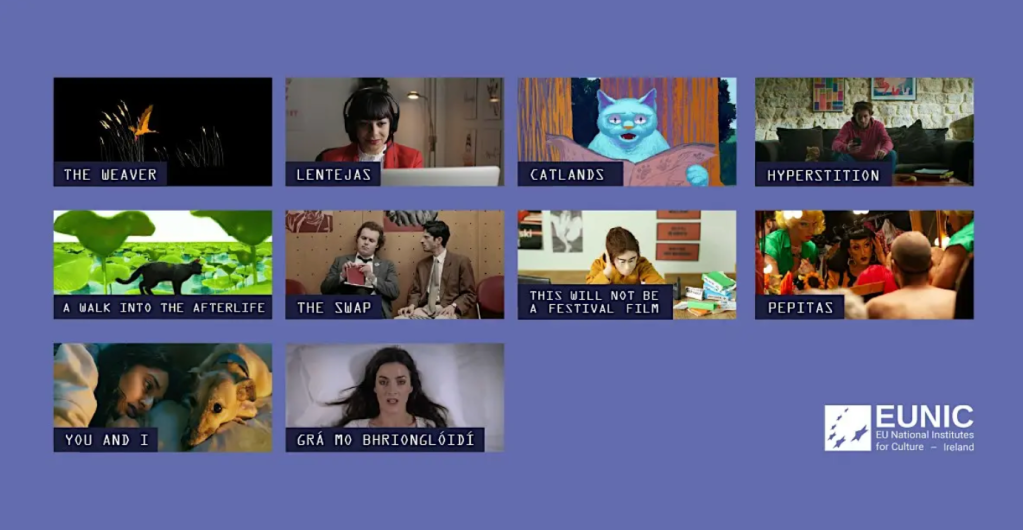
Limerick School of Art & Design -TUS to host EUNIC Short Shorts Film Festival for Europe 2025 – Thursday 16th October at 6 pm – TUS – Millennium Theatre.

All welcome! Admission free but advance booking required.

EUNIC Short Shorts from Europe 2025
The 2025 edition of the EUNIC Short Shorts from Europe Film Festival focuses on animation cinema and will feature short films from Cyprus, Hungary, Portugal, Poland, Ireland, Croatia, Spain, Italy, France, and Slovenia, screened in their original language with English subtitles. The opening night will be held on Thursday, 16 October, at 6 pm at the Millennium Theatre, TUS Limerick.

All films in English or with English subtitles.

After the screenings, viewers will have the chance to vote for their favourite short film.

EUNIC – EU National Institutes for Culture is the network of European Union National Institutes of Culture, bringing together the cultural institutes and offices of EU member countries in Ireland.

Event organised by – Creative Broadcast and Film Production LSAD TUS, Department of Digital Arts and Media, Limerick. For more information please contact:
stefano.odorico@tus.ie

Eventbrite link:
https://lnkd.in/eqN7HNEx