Posts Tagged ‘TUS’

Dr Simon McGuire

The landscape of higher education in Ireland, and particularly within the creative sectors of film and television, is undergoing a profound recalibration. As educators, we find ourselves navigating a convergence of technological acceleration, infrastructural constraint, and shifting economic and cultural realities. Yet within this turbulence lies an opportunity: to rethink not just how we teach, but what it means to prepare students for a screen industry that is itself in a constant state of flux.

With a sector that is expanding faster than its classrooms, Ireland’s audiovisual industries are thriving. Recent data highlights employment of nearly 16,000 people and significant economic contribution, underlining the industry’s vitality and global relevance (Screen Ireland Link). Alongside this, reports on immersive technologies and virtual production point toward a future defined by real-time rendering, AI-assisted workflows, and cross-platform storytelling (Skillnet Ireland Link). However, Higher Education has not expanded at the same pace. Institutions are expected to deliver industry-ready graduates while contending with ageing facilities, limited access to high-end equipment, and increasing student numbers. This mismatch between industry expectation and educational capacity is becoming one of the defining tensions in Irish creative education and I am sure is a talking point in this week’s teaching union meetings across the country.

There is a material reality also with the financial constraints being well documented. A widely cited government report showed a funding gap of over €300 million annually in Irish higher education, a deficit that continues to shape institutional decision-making (The Irish Times Link). While the report is three years old now, this underfunding still exists and I would argue that the figure is far greater and manifests itself in tangible ways such as: insufficient studio space, outdated post-production labs, and limited access to industry-standard tools such as camera, lighting and sound equipment. At the same time, the cost of keeping competitive film and television programmes is rising. Cameras, lighting rigs, editing suites, and now virtual production environments require continuous and not just the initial capital investment. Yet universities increasingly rely on hybrid funding models, including in some cases industry partnerships, which can risk narrowing the scope of academic inquiry toward commercially workable outputs (Public Policy Link).

Space is another critical pressure point. Reports on Higher Education infrastructure note that institutions are being forced to rethink how physical environments are used, with flexible and multi-purpose spaces becoming essential (Savills Link) For film and television education, traditionally reliant on dedicated studios, this presents both a challenge and a creative constraint. The most significant shift is technological. The integration of AI into editing workflows, the rise of cloud-based collaboration, and the emergence of virtual production are fundamentally altering the grammar of screen production. These are not incremental changes; they redefine authorship, labour, and craft.

Irish higher education has already begun adapting. Quality reports highlight increased digitalisation of teaching, learning, and assessment, alongside hybrid and remote workflows (Quality and Qualifications Ireland Link). However, there is still a gap between adopting digital tools and embedding them meaningfully into pedagogical or andragogical practice. The challenge is not simply access to technology, but developing critical, reflective practitioners who can navigate and question these tools. Considering these pressures, I propose three practical, scalable responses that can be implemented across Irish Higher Education.

Firstly, a distributed studio model.

Rather than centralising production within a single campus facility, institutions should adopt a distributed model of practice. This would involve:

  • Leveraging community media hubs and regional partnerships
  • Embedding production activity in real-world contexts
  • And if possible, sharing resources across institutions and sectors

In my doctoral research, I suggested an in-house production (IPU) unit to bring teaching and learning of craftsmanship together with industry engagent. I create one such IPU at my institution in the form of Film Cel (Film Craftsmanship, Excellence and Learning) (Link) at my institution, LSAD, TUS, and I believe that an IPU like this could bring together the the three elements above together for the distributed model of practice. National policy already points in this direction. The Future of Media Commission recommends the development of shared media hubs and collaborative training infrastructures to support talent pipelines (RTE Link). For educators, this model would not only alleviate space constraints but situate learning within authentic production ecosystems.

A second approach would be to look at curriculum as a workflow and not a module.

Traditional module-based teaching structures are increasingly misaligned with industry practice. Instead, curricula could be restructured around workflows such as:

  • Development → production → post-production → distribution
  • Cross-disciplinary collaboration (editing, sound, VFX, producing)
  • Integration of AI and virtual tools as part of process, not add-ons

This approach would reflect the realities of contemporary screen industries, where roles are fluid and pipelines are interconnected. It also aligns with broader Higher Education trends toward flexible or hybrid learning environments (Royal Irish Academy Link).

Finally, there is an opportunity for industry embedded learning, but with safeguards for the institution, staff, and students. Partnerships with industry are essential but must be carefully structured. Institutions should:

  • Co-design projects with industry partners
  • Embed internships, mentorships, and live briefs into programmes
  • Maintain academic independence and critical inquiry

While private sector funding can provide vital resources, it also raises concerns about the commercialisation of education (Public Policy Link). The goal, therefore, is balance: enabling access to industry without compromising the broader educational mission.

So, with these three suggestions we could take the future of teaching film and television in Ireland from constraint to creative. The teaching and learning would not be defined by the resources we lack, but by how we respond to those limitations. Financial pressures, spatial constraints, and technological disruption are not temporary obstacles, they are the conditions within which contemporary education must operate. As educators, our role is to transform these constraints into pedagogical or even andragogical innovation. To move from the idea of the university as a site of instruction to a site of production, collaboration, and experimentation.

If we can achieve this, we will not simply keep pace with the industry, we will help shape its future.


This is episode 2 of series 9 of Word On the Street, a production by Film CEL. LSAD’s in-house production unit.

This episode features the new building at the Moylish Campus and the EUNIC Film Festival at the Millennium Theatre. Word On The Street is a non-for-profit news programme, produced by Film CEL, the in-house production unit, consisting of students and staff members of Limerick School of Art and Design TUS. Opening theme track: Ampyx & SANDR – New Colors

Limerick School of Art and Design TUS.

Limerick School of Art & Design -TUS to host EUNIC Short Shorts Film Festival for Europe 2025 – Thursday 16th October at 6 pm – TUS – Millennium Theatre.

All welcome! Admission free but advance booking required.

EUNIC Short Shorts from Europe 2025
The 2025 edition of the EUNIC Short Shorts from Europe Film Festival focuses on animation cinema and will feature short films from Cyprus, Hungary, Portugal, Poland, Ireland, Croatia, Spain, Italy, France, and Slovenia, screened in their original language with English subtitles. The opening night will be held on Thursday, 16 October, at 6 pm at the Millennium Theatre, TUS Limerick.

All films in English or with English subtitles.

After the screenings, viewers will have the chance to vote for their favourite short film.

EUNIC – EU National Institutes for Culture is the network of European Union National Institutes of Culture, bringing together the cultural institutes and offices of EU member countries in Ireland.

Event organised by – Creative Broadcast and Film Production LSAD TUS, Department of Digital Arts and Media, Limerick. For more information please contact:
stefano.odorico@tus.ie

Eventbrite link:
https://lnkd.in/eqN7HNEx

A short montage video highlighting a number of features of the LSAD Graduate Show 2025, including the special commissioned portrait by lecturer and artist Ken Coleman to the outgoing Dean of LSAD, Mike Fitzpatrick. Produced by Film CEL, LSAD’s in-house production unit. filmcel@tus.ie

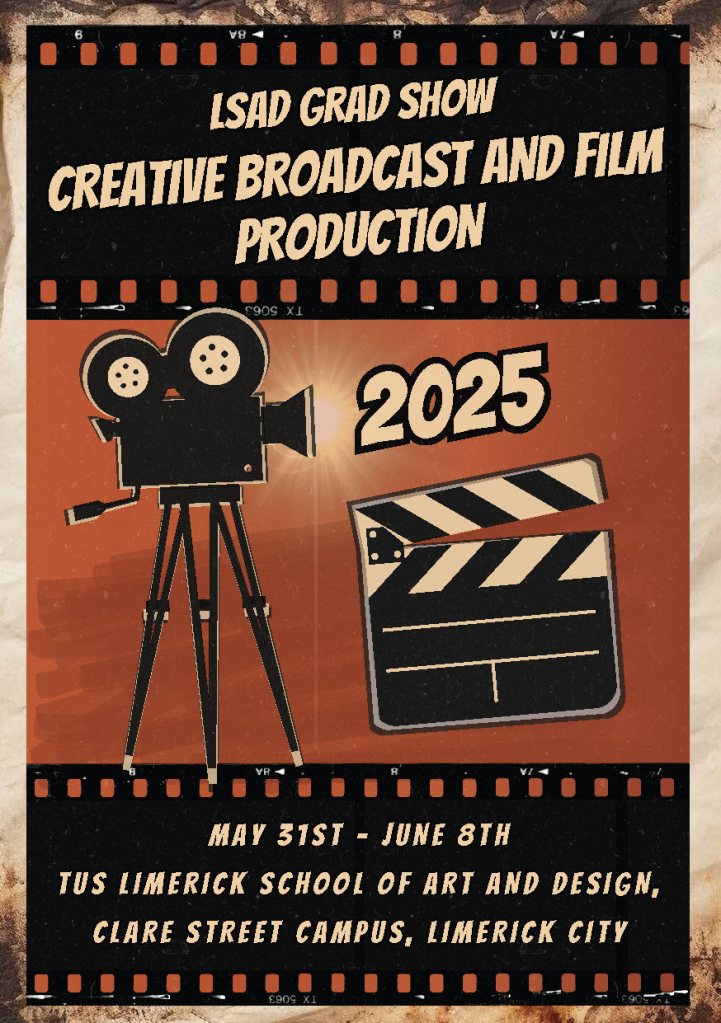
Taking place at the annual LSAD Graduation show at the Clare Street Campus, Limerick, will be the screening of end of year capstone projects from the 4th year Creative Broadcast & Film Production students.

There will be a series of short films, documentaries, portfolios and dissertations available to the public in a selected location in the campus, where the students themselves will also be in attendance to chat about their work and hopefully network too with visitors and even interested industry parties.

Why not come along to this event which is open from May 31st to June 8th 2025.

This highlights reel features a selection of content and programmes that were created by the 2025 crew of Film CEL. This years crew excelled themselves on all productions and projects, gaining experience on planning, camera operation, grip and rigging, lighting and sound and post production using Avid Media Composer.

This crew will continue as students in the year 4 of the Creative Broadcast and Film Production programme at LSAD, TUS where they will take these skills and develop new content and creative works for their final year.

Music track: Tell Me by Burgundy Source: https://freetouse.com/music Copyright Free Music for Video

Film CEL is an in-house production unit for the Creative Broadcast & Film Production Programme at LSAD, TUS.

Via Limerick.ie

This week came the announcement of a US production to begin filming their first series here in Limerick at Troy Studios. This comes on the back of a successful pilot which was produced at Troy Studios in 2023. Stephen Hall, was a graduate of the Creative Broadcast & Film Production programme at LSAD, TUS and is one of the producers of the programme. Paul C.Ryan, Film in Limerick Coordinator, explains more about this

As The Wayfinders begins filming at Troy Studios, Limerick and at locations in the region, we look back at the filming of the pilot episode.

Film in Limerick is proud to welcome back a major international production as filming begins on the epic fantasy series, The Wayfinders, at Troy Studios and on location throughout the region.

Set in a richly imagined world of myth, magic, and ancient conflict, The Wayfinders follows a band of unlikely heroes as they journey through a fractured realm in search of unity, purpose, and power. Featuring immersive storytelling, striking visuals, and a cast of both rising stars and familiar faces, the series promises to captivate fans of high fantasy worldwide.

Pre-production is now underway in Limerick, following the successful filming of the pilot episode in the region in October 2023. The pilot starred Mackenzie Crook (The Office, Pirates of the Caribbean) and was directed by Glen Winter (Smallville, Arrow, The Flash).

The production, from US-based Arrowstorm, and Limerick’s Dark Day Pictures, is expected to generate hundreds of local jobs and bring significant economic impact to the area.

Producer Stephen Hall of Dark Day Pictures added:
“We’re thrilled to bring The Wayfinders Season 1 back to Limerick and the region. As a Limerick local, it’s so exciting to be making our magical show in the region and putting our wonderful locations and talented crew front and center, on the world stage. The support from the councils, businesses and the community has been incredible. We have so much to offer in the Midwest, it’s quite special to build the film community here with the help of Film In Limerick and the talent of the local crew.”

With pre-production already underway, filming is set to begin later this month. Further announcements regarding casting and release dates are expected in the coming weeks.


Left to Right: Paul C. Ryan, Film in Limerick, Tara Doolan, Line Producer, Sean Flynn, Location Manager, Mike Jones, Producer, Justin Partridge, Writer & Exec Producer, Mayor John Moran, Jennifer Griffin, Exec Producer, Rachael Power, Film in Limerick, Stephen Hall, Producer

Links:

Stephen Hall

Creative Broadcast & Film Production

The Wayfinders

Digital Arts and Media Showcase

Book your place here

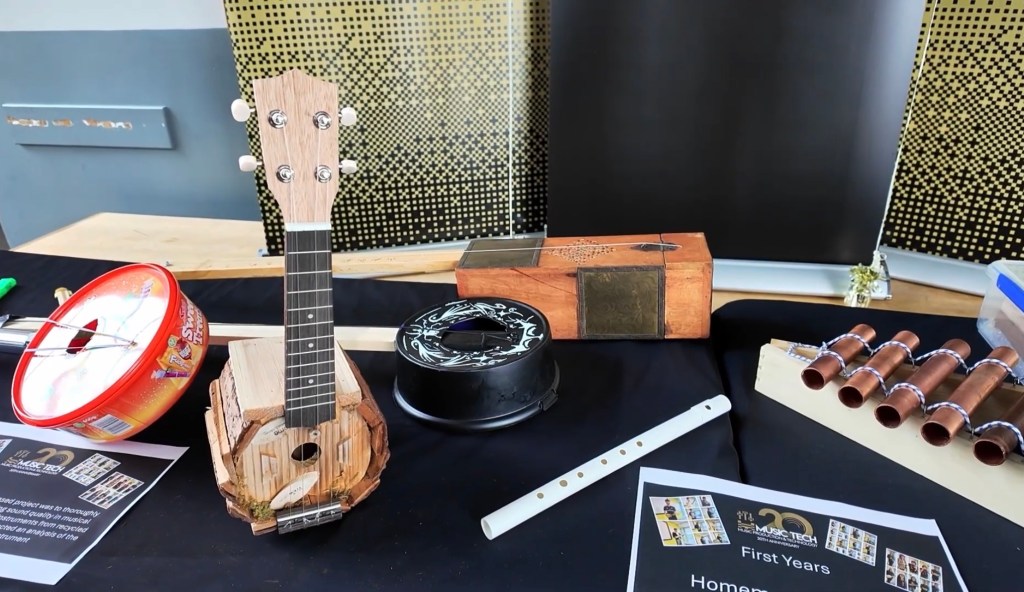
The Department of Digital Arts and Media at TUS is delighted to invite you to our Showcase Event presenting the work of students from the Music Production and Technology & Creative Broadcast and Film Production degrees at TUS Moylish Campus, Limerick.

Event Schedule:

Music Production and Technology Showcase:

  • 9:30 AM Film Screenings: Enjoy popular film clips with reimagined sound effects, dialog, and music from our 2nd year Music Production & Technology students.
  • 10:30 AM Premiere of 1st Year Student Group Song Compositions: Witness the creativity and talent of our 1st year students.
  • 11:40 AM Live Performances: Experience a variety of musical numbers arranged and performed by students from 1st year.
  • 1:15 PM Millennium Sessions Production Premiere: Watch highlights from our in-house student-led events and production teams from Music Production & Technology 3rd years and Creative Broadcast & Film Production’s inhouse student production group, FilmCel.
  • 2:00 PM Live Performances: Featuring arrangements and compositions created and performed by our final year students.

Creative Broadcast and Film Production Showcase:

  • 9:30 AM – 3:00 PM Creative Broadcast & Film Production Showcase Screening: Watch student productions including broadcast, documentary, animation, and award-winning final year student films in the theatre foyer. Headphones provided for an immersive experience.
  • 10:00 AM – 1:00 PM ‘Try it Yourself’ Drop-in Tasters: Host your first podcast, capture your first professional photos, and shoot your first movie frames in the theatre foyer.
  • 1:15 PM – 2:00 PM Millennium Sessions Production Premiere: Watch highlights from our in-house student-led events and production teams from Creative Broadcast and Film Production Year 3 FilmCel and Music Production 3rd years students in the theatre.

We believe this showcase will be a fantastic opportunity for anyone interested in both Music Production and Technology and Creative Broadcast and Film Production courses at TUS to experience firsthand the variety of projects, skills, and formats students create as part of these courses.

Lecturers and students will be available throughout the day to provide information on the courses and answer any questions you may have about studying with us.

If you wish to attend, please complete the booking form above or below.

We look forward to welcoming you to what we hope will be an inspiring and entertaining event.

Follow us on Instagram for more updates and sneak peeks: @tus_digitalartsandmedia

Book your place here

Film CEL releases new episode of ‘Word on The Street’ produced by CBFP Year 3 Work Practice students

Congradulations to Year 3 Film CEL crew of LSAD, on the release of the final episode of ‘Word on the Street’ Series 8 Episode 5. This episode features stories on the N.I.C.E. Italian Film Festival, The Access All Areas event at Troy Studios and the upcoming Millennium Sessions Programme in April. 

Produced by the crew of Film CEL, LSAD’s in-house production unit.

Watch it below

Follow and subscribe for news on Film CEL productions on LSAD YouTube channel and on Instagram 

Film CEL crew 

Film CEL Crew (L to R): Liam de Klein, Melissa Rudge David Vetharudge, Alan Wynne, Kaila Huynh, Diarmuid Burke, Yeva Kravchenko and Ger Hickey

Additional dates for your diaries:

Millennium Sessions 2025 Programme debuts on April 9th, 1:15pm on YouTube and at the Millennium Theatre.

LSAD Grad Show – CBFP 4 Exhibition of graduate work opens May 31st- June 7th 2025 at LSAD, Clare Street Limerick