
Archive for the ‘media’ Category

FLiC’s community film projects involve the development of a series of community based participatory film projects with community groups in Limerick and the surrounding mid west areas. In conjunction with Limerick Institute of Technology, the Arts council, and Limerick City and County Councils the flic projects will create a series of high quality films, working with community groups to develop technical, practical, and personal skills in the area of documentary film making.

FLiC’s Vision

FLiC’s vision is the development of highly creative and technically excellent film productions. To achieve these standards a panel of experienced filmmakers will be created and a suitable filmmaker assigned to each community group. In the project’s initiators Nora Ni Fhlatharta and Michael Mann, themselves broadcast filmmakers with over six years experience in community based film work, standards will be rigorous maintained, with the selection of the filmmaker’s panel decided on by their creative and technical experience in the filmmaking process and co-agreed by the local authorities involved.

Film in the Community

Film is a highly collaborative medium, and in its inception, participatory film brings creative artists directly into the community in an imaginative exploration of the range of cultures and histories of these communities. By working with a diverse range of community groups and filmmakers the FLiC projects will demonstrate the wide diversity of cultural experiences in modern Ireland, specifically of the mid west region. By combining the skills of the artistic film making community with the support of local authorities the FLiC projects will work with a wide range of inter cultural community groups such as Doras Lumimní, Southhill Garda Diversion Initiative, Northside Learning Hub and the Paul Partnership.

As with any film production, organization, scheduling and budgeting are of the upmost importance. Each of the projects will adhere to strict scheduling in production and post- production. In Limerick institute of Technology, FLiC has a valuable collaborator in the provision of high end HD cameras, professional audio equipment and post production houses as well as the technical support it offers to the project leaders and film editors ensuring a polished finish to the films worthy of festival screening. The overall schedule for production will run throughout the summer months, post-production running during the month of September and local screenings in November. The finished films will them be available for festival screening the following year.

The FLiC series of short films (15 -20 minutes) aim to document a broad range of issues and subjects relevant to the local community, by facilitating and empowering groups to tell their own stories. This will be achieved by offering the participants basic foundation training in the areas of scripting, directing, camera and sound operation, and basic editing skills. The participating group is then encouraged to tell their own stories based on the common theme of identity.

For more information on the FLiC Project please contact:

Michael Mann

Tel: 087 6324069

Email: info@fmmedia.ie

Nora Ni Fhlatharta

Tel: 086 1901127

Email: nora.nifhlatharta@lit.ie


Hi All

Have a look at the latest offering from Panasonic in 3D Camera technology…

Am drooling!!!!

Panasonic Pro Website

The Panasonic AG-AF101

Posted: October 31, 2010 in Film, media
Tags: , , ,

The Panasonic AG-AF101 – the first professional micro 4/3” video camcorder optimised for high-definition video recording was revealed at the Wildscreen Festival 2010. Available in December, the AG-AF101 will set a new benchmark for digital cinematography.

Targeted at the video and film production communities, the AF101 delivers the shallow depth of field and wider field of view of a large imager, with the flexibility and cost advantages of use with a growing line of professional quality, industry standard micro 4/3-inch lenses, filters, and adapters. The full 1080 and 720 production camera offers superior video handling, native 1080/24p recording, variable frame rates, professional audio capabilities, and compatibility with SDHC and SDXC media.

The design of the AF101’s micro 4/3-inch sensor affords depth of field and field of view similar to that of 35mm movie cameras in a less expensive, ergonomically built camera body. The AG-AF101 offers a mobile, field solution for industry professionals to capture entrancing, crisp foreground images in front of a soft blur background. Equipped with an interchangeable lens mount, the AG-AF101 is also free to use an array of cost-diverse, widely-available still camera lenses as well as film-style lenses with fixed focal lengths and primes.

The AF101 incorporates a 4/3-inch, 16:9 MOS imager. The camcorder records 1080/60i, 50i, 30p, 25p and 24p (native) and 720/60p, 50p, 30p, 25p and 24p (native) in AVCHD’s highest-quality PH mode (maximum 24Mbps). Ready for global production standards, the camcorder is 60Hz and 50Hz switchable.

The AF101 maximises the potential of its high-resolution imager with built-in ND filtering and dramatically reduced video aliasing. Standard professional interfaces include HD-SDI out, HDMI, time code recording, built-in stereo microphone and USB 2.0. The AF101 features two XLR inputs with +48V Phantom Power capability, 48-kHz/16-bit two-channel digital audio recording and supports LPCM/Dolby-AC3.

This newest Panasonic AVCCAM camcorder is the first to enjoy the benefits of advanced SDXC media card compatibility in addition to existing SDHC card support. (SDXC is the newest SD memory card specification that supports memory capacities above 32GB up to 2TB). With two SD slots, the AF101 can record up to 12 hours on two 64GB SDXC cards in PH mode.

The AG-AF101 is now available with a three-year limited warranty (one year with an additional two extra years upon registration).


Panasonic Website

IOV Article


The Japanese Film Festival will launch in Cork City, on Friday October 29th before touring Limerick, Galway and Dublin throughout November. As with the festival’s two previous installments, the event is co-organised by the Embassy of Japan, access>CINEMA and the Ireland Japan Association.

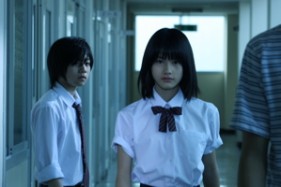
Highlights in this year’s programme include the genre-bending ‘Fish Story’, which is set in five different time periods and incorporates such disparate subjects as punk music, plagiarism, and impending Armageddon; the classroom drama ‘Confessions’, which explores the dire consequence of unchecked bullying, and ‘The Sky Crawlers’ (directed by Mamoru Oshii, whose ‘Ghost in The Shell’ featured in last year’s Festival) which depicts a world where war has become a company sponsored reality game. The 2010 festival will also offer a rare opportunity to see the invigorating ‘Ping Pong’, a modern classic of Japanese cinema, back on the big screen where it belongs. 

The Japanese Film Festival will be based in the cinemobile in UCC, Cork from the 29th to the 31st of October, after which it will be based in the Campus screening room of UL, Limerick on November 1st and 2nd. Following this the Cinemobile will move to Galway’s Waterside area from the 5th to the 7th of November whereby it will reach its final destination of Dublin’s Cineworld from the 12th to the 14th of November.

The Japanese Film Festival aims to foster a deeper understanding of Japanese culture and society among Irish citizens and to strengthen the cultural ties between the two countries. As such there will be a number of special cultural events at certain venues, for more information about these visit www.accesscinema.ie.

Taken from the ITFN.ie website

Open Your Eyes Short Film Competition

The HSE in partnership with the Department of Health and Children, Age Action, The Alzheimer Society of Ireland, Carer’s Association, Garda Siochana, and Active Retirement Ireland has established a committee which is working to highlight the issue of elder abuse and promoting the availability of support and services to people who need them.

Elder Abuse is defined as ‘‘a single or repeated act, or lack of appropriate action, occurring within any relationship where there is an expectation of trust which causes harm or distress to an older person or violates their human and civil rights.’’

One of the key projects to raise awareness of Elder Abuse is the Open Your Eyes To Elder Abuse short film competition. The competition has two categories:

  1. Full time education category open to second and third level students and
  2. General public category, open to any group or individual

Each category has a 1st prize of 1,000; 2nd prize of 500 and 3rd prize of 250.

A full list of the rules, judging criteria, tems & conditions and entry details are available here ; entries have to conform to the entry rules and must be submitted by e-mail to openyoureyes@hse.ie

http://www.hse.ie/eng/services/Find_a_Service/Older_People_Services/Filmcompetition/

This was posted on http://www.filmireland.net/2010/10/20/dare2bdrinkawareie-film-competition/

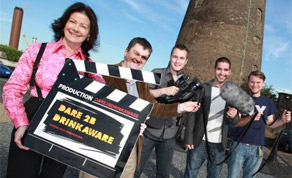
DARE2BDRINKAWARE, now in its fourth year, is a competition for film and multimedia students, organised by The Digital Hub and sponsored by drinkaware.ie. The competition challenges students to explore the relationship between Irish culture and drinking through a film or multimedia project.

The deadline for submission of project proposals to the Digital Hub is November 11th 2010; these can also be submitted online.

Prizes of € 1,000 will be awarded for the winners of the ‘Official Award’ as well as the ‘People’s Choice’. Films can be of any genre and filmmakers are invited to use any video recording devices ranging from HD cameras to mobile phones.

The deadline for completed entries is March 18th 2011.

For more information on how to enter visit DARE2BDRINKAWARE.ie


To Obtain an application form for the 2nd Annual LIT Film Festival Competition see the following links:

Application Form

http://dl.dropbox.com/u/10056372/LIT%20FILM%20FEST%20ENTRY%20FORM.pdf

Articles of Submision

http://dl.dropbox.com/u/10056372/LIT%20FILM%20FESTIVAL%202011%20Articles%20of%20Submission.pdf\


LIT Film Festival 2011


It is time to rescue film | Ken Loach

Hi all,
Please have a read of this article as written by Ken Loach this week. If poses interesting questions on the UK Film industry, I can see certain points here that the Irish Film and television industries could learn from too.
Si.

Ken Loach
The Guardian Comment Fri 15 Oct 2010 19:00 BST
Film has the potential to be a most beautiful art, but it has been debased by US cinema, and by television

Film is an extraordinary medium. Like theatre, it has all the elements of drama. It has character, plot, conflict, resolution. You can compare it to the visual arts, to painting, to*drawing; it can document reality, like still photographs. It can explain and record like journalism, and it can be a polemic, like a pamphlet. It can be prosaic and poetic, it can be tragic and comic, it can be escapist and committed, surreal and realist. It can do all these things.
So, how have we protected and nurtured and developed this great, exciting, complex medium? How have we looked after it, and does it fulfil its potential?
Over a seven-year period, the US market share of box-office takings in British cinemas was between 63% and 80%. The UK share, which was mainly for American co-productions, was between 15% and 30%; films from Europe and the rest of the world took only 2% to 3%. So for most people it’s almost impossible to have a choice of films; you get what you’re given. As for television, only 3.3% of the films shown on TV are from European and world cinema.
Just imagine, if you went into the library and the bookshelves were stacked with 63% to 80% American fiction, 15% to 30% half-American, half-British fiction, and then all the other writers in the whole world just 3%. Imagine that in the art galleries, in terms of pictures; imagine it in the theatres. You can’t, it is inconceivable – and yet this is what we do to the cinema, which we think is a most beautiful art.
How can we change this? We could start by treating cinemas like we treat theatres. They could be owned, as they are in many cases, by the municipalities, and programmed by people who care about films – the London Film Festival, for example, is full of people who care*about films.
And we could decide to tackle television, which has become the enemy of creativity. Here, drama is produced beneath a pyramid of producers, executive producers, commissioning editors, heads of department, assistant heads of department, and so on, that sits on top of the group of people doing the work and stifles the life out of them.
Connection between the writer and the director is not approved of. Scripts are approved just before shooting, even after shooting has started. Discussions at the commissioning stage are always about other television programmes, not the primary source, not what are we making the film about.
When you get into the cutting room the same thing happens. First assemblies, when the shots are put together, go out to executives who then send notes. There’s a director’s version, immediately sacrificed when the producer comes in; then the producer’s version is discussed with the executive producer. And then that is changed, and then the commissioning editor comes in, and so on and so on.
I’m pleased to see that one or two top-ranking BBC people are going to lose their jobs. About time. It takes £1m to get them out of the door, but nevertheless they’re on their way. Maybe a few more will join them. Now let’s start cutting further down.
To think that our television is in the hands of these time-servers is nothing less than a tragedy. Because television began with such high hopes, it was going to be the National Theatre of the air. It was going to really be a place where society could have a national discourse and they’ve reduced it to a grotesque reality game. This should not be used to denigrate the idea of public service broadcasting. The commercial sector is probably worse.
What we want, and what writers need to write, are original stories, original characters, plot, conflict, things that dig into our current experience. Things that really show us how we’re living, give us a perspective on what is happening. That’s what television could do, that’s what they have betrayed.
Ratings are the prime consideration. Investigative journalism, where is it? Where’s World in Action? One director told me that he was asked to make a film about debt; they were going to do a series about debt and getting into debt. But the requirement was that there were to be no poor people, because obviously poor people are a bit depressing and they don’t sell the adverts.
Those of us who work in television and film have a role to be critical, to be challenging, to be rude, to be disturbing, not to be part of the establishment. We need to keep our independence. We need to be mischievous. We need to be challenging. We shouldn’t take no for an answer. If we aren’t there as the court jester or as the people with the questions they don’t want asked who will be?
Let’s finally start to realise the potential of this extraordinary medium that we call film.

LIT FILM FESTIVAL INITIAL POSTER

Posted: October 12, 2010 in Film, media
Tags: ,

LIT Film Festival 2011

LIT Film Festival 2011

LIT Film Festival 2011

Hi all

The Application Form and Articles of Submission are now available for the 2nd Annual LIT Film Festival Awards 2011.

This years festival will take place over two days on April 14th and 15th 2011 at Limerick Institute of Technology. After last years successful opening the organizers have decided to expand the competition to the general public. This will open the the standard to all levels of the video profession in the region.

On April 14th there will be an industry exhibition by multiple companies as well as workshops from industry professionals. Details of this will follow in due course.

On April 15th at the Millennium Theatre, there will be the film viewing during the day followed by the awards night. This will be an invitational event. Again more details will follow in due course.

If you would like to enter here is the link for the application form and Articles of Submission

Application Form

Articles of Submission


If you require further information then check out the Facebook Page and the Twitter updates @litfilmfestival