




Dr. Simon McGuire
Over the past decade, something quietly transformative has been happening in the Mid-West of Ireland. Once considered peripheral to the Irish screen industry, Limerick is increasingly finding itself at the centre of major international film and television production. At the heart of this change is Troy Studios, Ireland’s largest purpose-built film and television production facility. Since opening in 2017, the studio has attracted large-scale international productions and helped establish the Mid-West as a serious player in global screen production, (limerick.ie) Recent developments signal that this growth is far from slowing down. A new multi-million euro partnership aims to transform Troy Studios into a global hub for unscripted television formats, with international productions expected to begin pilot projects from 2026 onwards. (limerick.ie)
These developments raise an important question for the region: If production is growing rapidly in Limerick, why is so much post-production still happening elsewhere?
Historically, Ireland’s post-production infrastructure has been concentrated in and around Dublin. Editing suites, sound mixing facilities, colour grading houses, and VFX studios have developed around the capital due to the clustering effect typical of creative industries. Examples of these would include; ScreenScene, Pirana Bar and Element Post to name but a few… not forgetting the recently closed Windmill Lane Post facility.
However, Limerick’s screen ecosystem is beginning to look different. Large productions have already demonstrated the region’s capability. Apple TV+’s Foundation, and Angel TV’s The Wayfinders for example, generated hundreds of jobs during their time at Troy Studios and signalled to international producers that the Mid-West could host high-end television drama. The production of series two of The Wayfinders is also returning this April for its second series. Alongside these productions, a skilled workforce is emerging. More than 350 locally-based crew now operate in the region, many with experience on international features and television series. Yet while cameras, sets, props, and production offices are increasingly located in Limerick, the editorial pipeline often moves elsewhere once filming wraps. The common feedback I receive about this is that ‘editors can be remote’, ‘media drives travel‘, ‘post workflows can travel‘… and with them, the economic and creative opportunities.
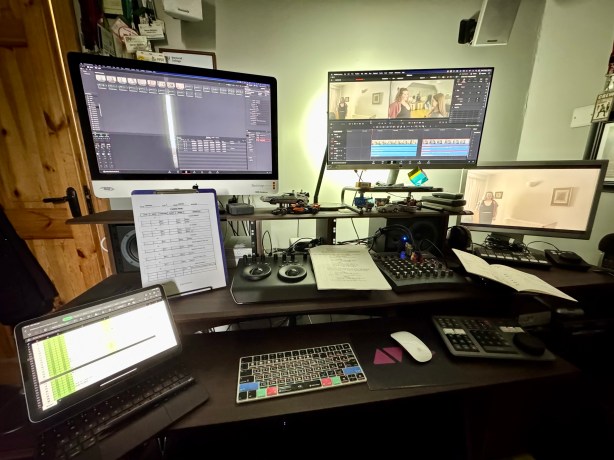
There is a case to be made for a Mid-West Post-Production House. Imagine a dedicated post-production facility located in Limerick city. Not simply a collection of editing rooms, but a full post-production ecosystem designed to support regional productions from offline edit through to delivery.
Such a facility could include:
- Offline editing suites (Avid / Premiere / Resolve)
- Shared storage and media management infrastructure
- Colour grading theatre
- Audio post-production and ADR facilities
- VFX and motion graphics workspaces
- Remote collaboration capabilities for international productions
This could fundamentally change the regional production pipeline. Instead of productions filming in Limerick and finishing in Dublin or London or further afield, projects could remain in the Mid-West for the entire creative lifecycle. This would in affect also benefit a talent pipeline that already exists in the region and strenghtening the argument of targeted education and training. Across Ireland, and particularly in the Mid-West, increasing numbers of students are studying film, television production, and post-production at third-level institutions such as LSAD, TUS, Mary Immaculate College UL and the Educational Training Board FETs. A number of these students specialising in editing, sound, and digital storytelling. Yet a recurring challenge emerges after graduation of gaining a foot in the door for crafts such as editing and post-production. There are very little opportunities for graduates outside of Dublin to build their careers and with the ever increasing cost of living in the capital city, where most jobs exist in this sector, the pressure to relocate to the capital or leave the industry is a real problem before these graduates even begin. A post-production house in Limerick could help retain this talent locally while strengthening the regional creative economy.
There are some economic ripple effects in this concept. Film production has already demonstrated its economic impact on the Mid-West. A single feature production can involve more than 90 local businesses, from hotels to construction suppliers. (Limerick’s Live 95) And a new Post-production eco-system could extend this economic footprint. Unlike location shooting, post-production can last months rather than weeks, bringing sustained employment to editors, assistant editors, sound designers, colourists, and technical operators. It also attracts a different type of creative professional, one who may settle in a city long-term rather than arriving temporarily for a shoot. This could contribute to the emergence of a permanent screen industry cluster in the Mid-West.
Ireland’s screen industry has long benefited from regional diversity of locations. But the next phase of growth may depend on regional diversity of infrastructure. Dublin will remain a critical centre for the industry, but if the Mid-West is to fully realise the potential created by Troy Studios and the growing local crew base, the region must also invest in the stages after the cameras stop rolling. Editing is where stories truly take shape. And perhaps the next chapter of Ireland’s post-production story could be written in Limerick.
There are some questions that may be worth asking if a post-production house in the Mid-West is possible:
- Could a regional post-production facility operate sustainably outside Dublin?
- What scale of investment would be required to establish a viable editing and finishing house?
- Could partnerships between industry, local authorities, and third-level institutions make such a project feasible?
- How might a facility integrate with the production activity at Troy Studios?
- Could this create a regional training pathway from student to assistant editor to editor?
- Might international productions be encouraged to complete post in Limerick if the infrastructure existed?
- Could shared facilities reduce barriers for independent filmmakers in the region?
- And most importantly: who might take the first step in making it happen?
The growth of screen production in the Mid-West suggests that the opportunity is real. The question now is whether the region is ready to edit its own future.

 Simon McGuire