Archive for August, 2013

Canon Dwyer20130828-092951.jpg

This week we were delighted to work with Canon Bob Hanna on a short documentary detailing the communities of Drumcliffe-Ennis, Kilnasoolagh-Newmarket-on-Fergus and
Kilfarboy- Spanish Pt.

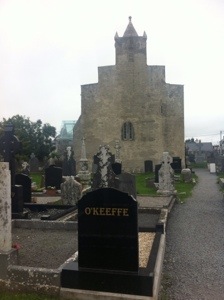
Locations included, ennis museum… st columbas church and kilfenora (pic)

Herbert Knowles of Kilnasoolagh Parish was also on hand to take behind the scenes photos.

Editing is underway.

Making the life of you editor easier.

Posted: August 26, 2013 in Editing
Tags:

I was browsing the web today and found this small bit of advise.

sally_menke_quentin_tarantino_01

The importance of the editor in film and video can not be overstated. For many, what makes film a unique artform from all others IS the editing. Furthermore, many famous directors “made their bones” as editors and credit that experience as the reason why they can direct.  And while many top directors switch DPs and crews for each production, they consistenly trust their work with one editor.

That’s why as a producer-director it’s important to hone and heighten that professional relationship with your editor to serve your film well.  This is the case even if you’re editing a film you directed yourself since you have to change hats when you step off the set and into the editing room to look at your footage with fresh eyes.  So, what are some things the producer and director can do to make the editor’s life easier, and by default, lead to a better finished film?  To find that out, I spoke with professional film and video editor, Liette Pedraza, who had the following things to say:

CARE AS MUCH ABOUT THE SOUND AS YOU DO ABOUT THE IMAGE AND THE ACTING

“Because they are focused only on the camera, lighting and acting, many directors place getting a decent sound person on the back burner and simply ask relatives and friends to record the sound for them. Then in the editing room they are shocked when they listen to their sound and hear how bad it is. It can’t be said enough that sound people are critical to a good production because audiences will forgive a dark image but if they can’t hear an actor’s line they will reject your film. It is one of the many things that separate an amateur’s film from a “professional” film.”
“In keeping with this idea of the importance of sound, here are some PRACTICAL TIPS regarding sound:

  • Don’t let your sound levels over-modulate because once it peaks, your audio will clip and without a good sound mix your take will be no good.
  • The sound person should take notes and write what channel the microphones are on. It makes it easier as an editor as well as for the sound mixer to narrow down any issues that arise. Mic placement is important so you don’t pick up an actors’ clothing brushing against the mic or the boom guy’s hands on the pole.
  • ALWAYS listen to your location before recording because there might be a piece of equipment in the room that might put a buzz in your audio.
  • Make sure crew people turn off their phones, even when a phone is on silent it can put a buzz in your audio track when it is receiving an email or text.  It’s a weird anomaly that many people don’t realize but an incoming text and email sometimes puts a digital glitch on your audio and you won’t hear it until you’re editing.  Better safe than sorry – turn it off.”


FACTOR A SOUND MIX INTO YOUR BUDGET

“Related to the sound issue, as well, is the importance of a sound mix. You don’t need to spend a fortune on a Hollywood sound mix but if you are aiming for a professional production, you need to invest some amount of money on it.  You really don’t want to end up in situation where, for example, your actor places a plate on the table and it makes such a loud noise while they deliver their lines that the sound levels get mixed up and muddled.  You want the levels to be appropriate to the action that is happening and a proper sound mix will fix any issues like this. “
“Plus if you’re shooting for TV, your levels have to be broadcast quality.  If your levels are not right, your program can get rejected and you will still have to get a mix.  Or worse, when your program airs, the levels will be much lower than the show that airs just before it and it will sound off.  I remember, how for an HD project that I was editing the producers had hired a really terrible sound person. The production had rented five HDCams with seven microphones and because it was a dinner scene with non-actors we had only one shot at getting it. The sound guys brought in all the sound into a mixer and fed the audio to all to the same camera mixed down to 2 channels. In theory it sounds like a good idea because it seems like that would keep things simple but what they ended up getting was the noise of one guy stirring his drink with ice even though he was not critical to the scene.  The stirring and clinking was louder than everyone else talking and it ruined the scene.  And to top it all off, one of the guys went to the bathroom with his microphone still on and simply destroyed the audio. That section of the audio was lost forever and turned out to be a waste of money. We managed a sound mix but there was only so much that could be done because those problems couldn’t be completely fixed.”

GIVE THE EDITOR CAMERA NOTES, SOUND NOTES AND CONTINUITY NOTES

“Nowadays it’s rare for indie filmmakers to insist that camera and sound crews keep notes on the set and even rarer for them to hire continuity script supervisors. Ideally, camera, sound and script supervisors should take consistent camera notes, sound notes or continuity notes, respectively.  Aside from the practical benefits they can give a producer or director on the set, these notes can be very helpful to the editor because it helps narrow down certain problems when it comes to post. Problems like a shaky dolly move or missed rack focus that the AC is supposed to note or a horn honk or thump that the sound person hears. Also, typically, continuity persons line the script so that I can see what lines were covered in what takes, if an actor missed a line and if they pick up an object with their left hand in the medium shot and in the long shot they pick it up with the opposite hand.  They also make notes and take photos of what was worn by what actor and what props were in the scene.  All those things are useful and can save money and time because it means the editor knows ahead of time what to work on and avoid or find instead of wasting time trying to fix something.  This lesson was made clear to me once on a film that I was editing when the continuity person missed taking notes on what the actress was wearing in the previous scene.  They ended up shooting the next scene with a brown dress instead of the blue dress and I ended up having to flip around scenes to make it work, extra work that could’ve gone to editing more important things.  I would say that keeping notes is not just good for the editor in post but also good for everyone to stay organized, focused and solve problems on the set during the shoot.”

GET COVERAGE


“This may seem like a no brainer but many times directors shoot their films and forget to get enough coverage to make an ok scene great. They should shoot closeups too, like a close up of the gun, a map or even fist during a fight scene.”
“Because I’ve edited alot of action movies and thrillers, here are some PRACTICAL TIPS for coverage in action scenes:

  • Don’t just shoot medium shots, shoot as many close-ups as you can.  Simple medium shots for a fight scene can make for a lack luster fight when there are no dynamic cutaways and the choreography is flat.  That’s why I recommend you get coverage with close-up shots of objects or body parts, at a minimum.”
  • “Another thing that should be simple to remember but is usually forgotten is to take establishing shots of the location.  If our characters are suppose to be in a office building or warehouse etc it helps the story if we have the cutaways of the building to help transition from scene to scene. Many directors forget the establishing shot because they are in a hurry or think they can take the shot another day and fix it in post.Sometimes you can’t, so it’s better to take care of it while you’re there.”

Liette Pedraza runs NY post production house, Crazy Diamond Postproductions – http://www.crazydiamondpost.com/  She has been editing for over 20 years on all a variety of linear and non-linear editing platforms particularly on the AVID and FCP. She is a versatile editor and can manage indie feature films and shorts as well as commericals, documentaries and reality shows.  Some of her career highlights have been editing the documentary series, N-R-Eyes; the music video series, Lifted; and, the feature film, City Teacher, starring Frank Vincent, Tommy Ford and Ella Joyce. She is currently working on Invisible Wounds & Kimmie’s Kitchen.   She can be reached for post production work at: lp@crazydiamondpost.com.

This was sourced from:

http://www.filmstrategy.com/2013/06/production-tips-4-ways-to-make-your.html?m=1


This was sent via email today:

Hi,

I wanted to email you about some exciting updates. We have new software for ATEM switchers, HyperDeck recorders, and desktop video products, as well as a fantastic price reduction and shipping update for cameras.

Camera Update

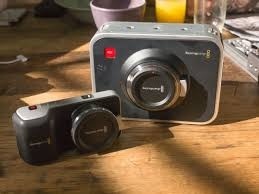
The new Blackmagic Pocket Cinema Camera is now shipping and there is a software update for it posted on our web site.

There are some new features in the software for the Pocket Cinema Camera. You can now focus by pushing the focus button when using an active MFT lens. This makes it very easy to accurately focus. The focus peaking feature is still there and you enable it by double pressing the focus button. The focus zoom feature is enabled by double pressing the OK button.

There will be an update for the 2.5K Blackmagic Cinema Camera soon that will also add these features, plus new de-bayer processing that will improve the cameras sharpness when shooting non RAW files.

The Blackmagic Production Camera 4K is not yet shipping as we need some more time. Our first batch of sensors was delivered only this week, so we have not been able to complete the software for the camera. We expect to start shipping in about 3 to 4 weeks once the final software work and testing is completed.

Blackmagic Cinema Camera Price Reduction

We have worked very hard over the last year to be able to build the Blackmagic Cinema Camera at a lower cost so we can reduce the price and allow access to digital filming to a wide range of cinematographers and photographers.

We have done it and from today the Blackmagic Cinema Camera EF and MFT models will be reduced in price to US$1,995. This is very exciting and is one of the proudest moments of my life to be able to do this!

I think people will be able to use the savings to invest in some exciting lenses and rigs to really boost the creative possibilities. The Blackmagic Cinema Camera is a fantastic design that’s now well proven. The advantage of the 2.5K sensor is it has enough resolution to eliminate the bayer resolution loss of a HD sensor, but when shooting RAW it produces files that are too not to big to store and work with easily. It’s a fantastic solution.

All orders placed that have not yet been filled, can be reduced to the new lower price.

HyperDeck Software 3.8

We have an exciting new version of software for the HyperDeck SSD recorders and this new update adds 6G-SDI support on the output for HyperDeck Studio Pro and adds on screen menus to both HyperDeck Studio models where you can set formats and other features. We have also added a new ethernet remote control support.

This is really easy to use and you connect HyperDeck to your network, set the IP address of the HyperDeck in the menu and then Telnet into the HyperDeck to get control. If you type play, the HyperDeck will play and if you type stop, then HyperDeck will stop. You can get clip lists and all kinds of control functions. There are more details in the instruction manual on the protocol.

This update is free of charge and on our web site now.

ATEM Switcher Software 4.1.1

We have a new software update for the ATEM switchers and it’s a big update with lots of new features. It includes a new save and restore that allows you to save the state of the switcher into an XML file, including all your media pool, into a folder of images. You can load that XML file back into the switcher to fully restore it with all settings and media back online.

You can even save parts of the switcher, such as a single keyer or even SuperSource and use them like Marcos. If you save the switcher, you also have the choice to load parts of the switcher, or the whole switcher. You can keep saving to keep rolling backups and each XML file is like a time based snapshot of your switcher state through the whole job. The media pool will keep adding any changed images to the media folder so you will get all media that’s used in the job and can restore back to any point in time. Its very powerful.

We have also been opening up some of the power of the new ATEM Production Studio 4K model that includes HDMI and 6G-SDI that operates in SD, HD and Ultra HD resolutions. This update now adds new 1080p progressive video formats including 23.98, 24, 25, 29.97, 50 and 59.94fps. This really opens up the number of devices you can plug in.

This update also fixes a bug in the ATEM Production Studio 4K that stopped some devices using RGB HDMI such as Playstation, Xbox, computers and GoPro cameras from working with the switcher HDMI inputs.

This software update is available now from our web site for download.

DaVinci Resolve 9.1.5

We have a small software update for DaVinci Resolve 9 that adds improved compatibility with Avid Media Composer 7.0 round trip, supports reel names in Final Cut Pro X XML, adds support for Avid EuControl Software Package Version 3.0, improves handling of multi track Quicktime audio files and adds improved Cinema DNG file format support.

This update is available for download from our web site.

Desktop Video 9.7.7

This new software update now adds support for the 4K DCI modes and adds improved compatibility for HDMI on the UltraStudio 4K and the DeckLink 4K Extreme models. We have also improved support for Avid Media Composer for the UltraStudio Mini Recorder and DeckLink Mini Recorder models.

This software update is available now for download from our web site.

Splice Community Web Site

Over the last few years I have spoken to more and more people at shows and seminars, and one thing that really struck me is how hard it is to be the best at editing, color correction, design and effects in this industry.

This is one very tough industry, but it’s so incredibly exciting! In my time in post production I have spent many hours at a post facility at 2 a.m. talking to editors who have just come out of a 15 hour session. You might know that feeling!

I have spent hours listening to editors, effects artists and colorists talking about the jobs they just completed and how it went and it was really exciting. I really want to share those stories with everyone!

So I have created a new community page where we have people talking about their stories and posting their projects and images online. It’s not about Blackmagic here, as I really just want to share people’s stories about their work and how they got started in the industry.

I get to talk to so many people from thousands of post production and broadcast facilities, so I hope this website lets others enjoy these stories as well.

When we proposed this website to people in the industry, they were really receptive to the idea and have been fantastic in supporting it. They have really opened up and shared the tough times as well as the good times. They have explained how they got started in the industry and even the big breaks that made them who they are today. It’s fantastic and we are so lucky that we have had this support.

If you are interested in reading these stories, please head to http://www.splicecommunity.com
I hope that Splice will be a community space where you can go to see the background stories behind so many great projects. We will feature everything we can from feature films, shorts, TVCs and documentaries. There are loads of projects from directors, DPs, editors, colorists, visual effects artists and post houses who have all shared their stories.

So please check it out! If you want to tell your story, please let the guys know via the website or Facebook. I hope you like it.

Splice website: http://www.splicecommunity.com Twitter: https://twitter.com/splicecommunity Facebook: http://www.facebook.com/splicecommunity
New York Seminar

We are hosting an event in New York City to show our latest products. This is a great opportunity if you have not been able to make it to one of the big trade shows to be able to come and meet us in person and get to see our newest products. We’ll be showing our new Ultra HD and 6G- SDI equipment, the latest DaVinci Resolve 10, our Cinema Cameras, and the rest of our latest developments.

This event is a great opportunity to get a sit down demonstration of our products, catch theater style presentations, speak directly with the Blackmagic Design team, and mingle over the provided refreshments with colleagues from the area!

Date: Thursday August 8th
Time: 11:00 AM – 7:00 PM
Location: New Yorker Hotel, 481 Eighth Ave, New York, NY
For more information and to register to attend, please visit: http://invite.blackmagicdesign.com/event2013/
I hope you found this update useful!

Regards,

Grant Petty
Blackmagic Design

You have received this email as you have registered a product with us or have attended an event at which Blackmagic Design was present or was a sponsor and to which you opted-in to receive occasional email communications from us. If you no longer wish to receive occasional updates from us, please unsubscribe. Alternatively you can contact our California office on +1 408 954 0500 or write to: Blackmagic Design, 2875 Bayview Drive, Fremont, CA 94538. USA.
20130802-101914.jpg